
Picking an online learning platform can feel like standing in front of three doors that all promise the same thing: a better skill set and a brighter next step. But Coursera, edX, and Udemy are built on different models, which means they work best for different kinds of learners.
In this guide, I’ll help you match the platform to your goal, whether you’re building career-ready credentials, exploring a new field, or learning a practical skill as quickly as possible.

At a glance
- Coursera: Best for structured learning with recognized certificates, professional certificates, and some degree pathways. Strong for career transitions when you want a clear sequence and accountability.
- edX: Best for university-style courses and academic depth, with reputable verified certificates and MicroMasters programs in select subjects. Great if you value rigor and institution branding.
- Udemy: Best for fast, practical, skill-specific courses (often project-based) at a low upfront cost. Ideal for targeted upskilling and trying things out without a long commitment.
How the platforms work
Coursera
Coursera partners with universities and major employers to offer individual courses, multi-course specializations, professional certificates, and in some cases full degrees. Many courses let you audit for free (watch content) and pay if you want graded assignments and a certificate, but availability varies by course and partner.
If you want recognizable, career-focused options, you will often see employer-backed programs from brands like Google, IBM, and Meta.
edX
edX also works with universities and organizations and is known for courses that feel closer to a traditional academic experience. Many courses let you audit for free, with an option to upgrade for a verified certificate, but audit terms vary and may be time-limited. edX also offers program bundles, including professional certificate tracks and MicroMasters programs in certain subjects.
Udemy
Udemy is a marketplace: instructors create courses, and you buy them individually. Prices vary, and frequent discounts are common. You typically get long-term access to the course you purchased, but access can change if a course is removed or if Udemy no longer has rights to it. Learning tends to be hands-on and immediately applicable.
Cost: what you’ll really pay
Cost is not just about the sticker price. It is also about how long you’ll need access, whether you want a credential, and how much structure you need to stay consistent.
Coursera pricing patterns
- Audit option: Often available for many courses, usually without a completion certificate and sometimes without graded work. Availability varies.
- Subscriptions: Many specializations and professional certificates use monthly pricing, which rewards steady progress.
- Financial aid: Available for many courses and programs if you qualify.
- Refunds: Policies vary by offering. For subscriptions, you generally stop paying by canceling, but you may lose access after your billing period ends.
edX pricing patterns
- Audit option: Common for many courses, generally without a verified certificate. Audit access may expire after a set window.
- Verified certificate: A one-time upgrade fee per course or program component is common.
- Program bundles: Can be more cost-effective than purchasing courses one by one if you plan to complete the full sequence.
- Refunds: Policies vary by course and program, so check before upgrading.
Udemy pricing patterns
- Pay per course: One-time purchases with ongoing access.
- Frequent promotions: Many learners wait for sales to purchase.
- Refund window: Udemy typically offers a limited refund period for many purchases. Always confirm current terms at checkout.
- Udemy Business: Some employers provide a subscription with a curated catalog.
If you need external accountability, a monthly subscription model can be a feature, not a flaw. If you want to learn one skill and keep the materials handy, a one-time purchase can be the calmer choice.

Course quality: what to expect
All three platforms have excellent courses. The difference is consistency and how much vetting happens before a course appears in the catalog.
Coursera quality signals
- Partner reputation: Courses are typically produced with universities or well-known companies.
- Clear pathways: Specializations and professional certificates are built as step-by-step sequences with defined outcomes.
- Assessments: More likely to include graded quizzes, projects, and peer-reviewed assignments.
edX quality signals
- Academic rigor: Often more reading, deeper lecture content, and formal assessments.
- Syllabus feel: Strong fit for learners who like a module plan, conceptual foundations, and a more course-like rhythm.
- Challenging pace: Some courses are self-paced, but many still feel like a semester course, which can be a plus if you want seriousness.
Udemy quality signals
- Instructor variability: Because anyone can publish, quality ranges from outstanding to just okay.
- Best for tools and workflows: Especially strong for software tutorials, creative tools, productivity systems, and practical business skills.
- Look for proof: Preview lessons, read recent reviews, check update dates, and look for downloadable resources or a project-based structure.
My quick vetting checklist (especially for Udemy):
- Updated within the last 12 to 18 months for tech topics
- High recent ratings (not just an old average)
- Clear outcomes and a final project
- Instructor answers questions or provides a Q&A space
Certificate value: what counts
Let’s separate two things that get mixed together: proof of learning and credential value. And one more important nuance: how much a certificate matters can vary a lot by employer, industry, and role. In many hiring processes, degrees and industry certifications still carry more weight than course certificates.
Coursera certificates
Coursera certificates are widely used on resumes and LinkedIn, especially professional certificates created with employers. For career changers, the strongest value tends to come from programs that include portfolio projects, graded assessments, and a clear skills map.
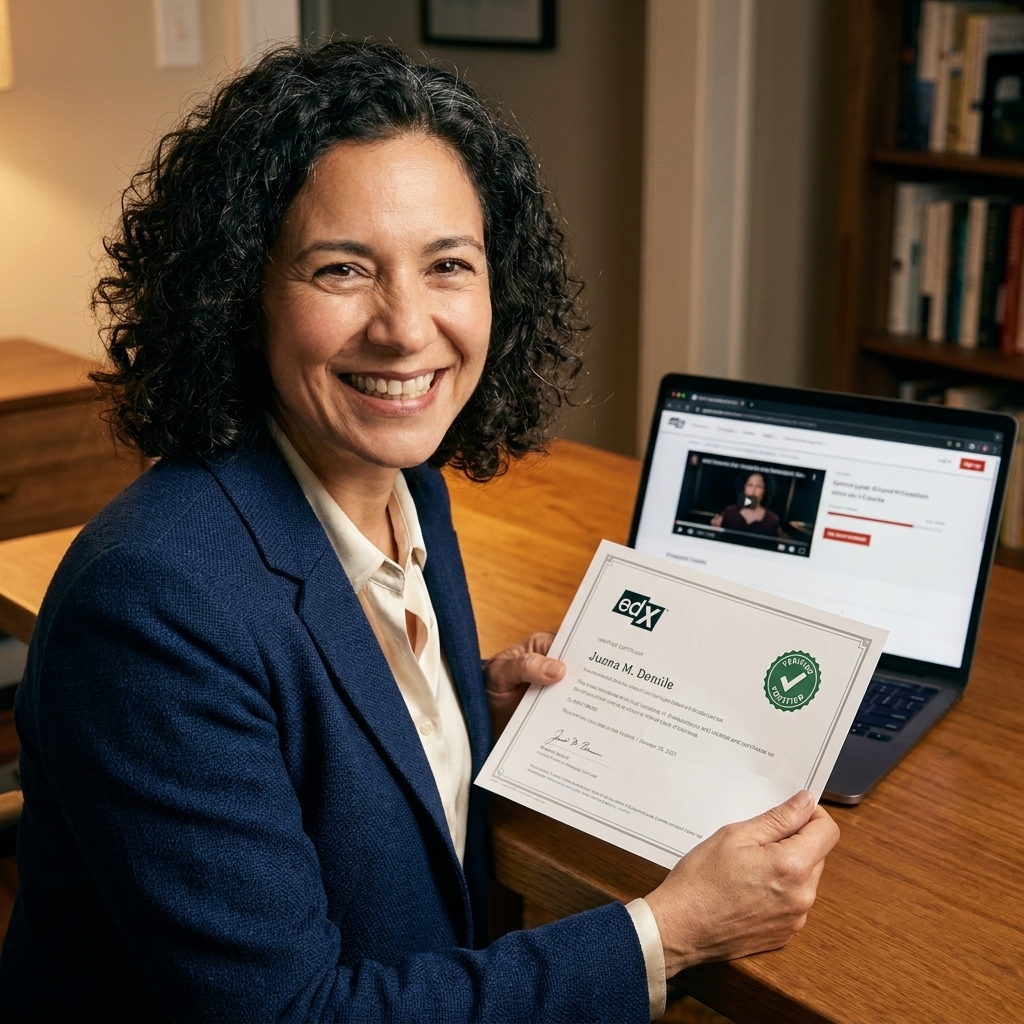
edX verified certificates
edX is often appealing if you care about university branding and academic alignment. Verified certificates can help for professional development and can support applications where you want to show seriousness in a subject. Some edX programs are designed as stepping stones toward more formal study, depending on the institution and program.
Udemy certificates of completion
Udemy provides certificates of completion, but they generally do not function as formal credentials. Their real value is skill evidence: a finished project, a GitHub repository, a design portfolio, a spreadsheet model, or a work sample you can show.
When in doubt, lead with outcomes. A certificate is a nice header. A portfolio is the proof.
Learning style fit
If you need structure
Best fit: Coursera or edX.
These platforms are built for guided progression. If you thrive with deadlines, weekly modules, and a clear finish line, you’ll likely feel more supported here than in a marketplace catalog.
If you want quick wins
Best fit: Udemy.
Udemy shines when you want to build something now: a website, a dashboard, a photo workflow, a business process, a coding feature. Choose a course with a project you can complete in a weekend and you’ll feel the payoff quickly.
If you want academic depth
Best fit: edX.
If you miss the feel of a university course and want conceptual understanding, edX is often the most satisfying. This is especially true for humanities, science, and foundational topics where depth matters.
If you’re busy
Best fit: Udemy for flexibility, Coursera for a guided pace.
Parents, full-time workers, and students already carrying a full schedule often do best with shorter lessons, mobile-friendly access, and the ability to pause without penalty.
Best platform by goal
Career change
- Choose Coursera if you want a professional certificate sequence with projects and a clear skills pathway.
- Choose edX if you want rigorous fundamentals and respected academic framing.
- Add Udemy as a practical supplement for tools used in job postings.
Upskilling at work
- Choose Udemy for targeted skills like Excel, SQL, Power BI, Adobe tools, project management software, or specific programming frameworks.
- Choose Coursera or edX when you need a broader, more credentialed arc you can share with your manager or HR.
Personal enrichment
- Choose edX for a more seminar-like experience.
- Choose Coursera for polished lectures and a wide selection across topics.
- Choose Udemy if you want hobby skills with a practical outcome.
Building a portfolio
- Choose Udemy for project-based courses that result in tangible work samples.
- Choose Coursera when the program includes graded projects you can package into a portfolio.
Decision flow
If you’re stuck, walk yourself through these questions:
- Do I need a recognized credential? Start with Coursera or edX.
- Do I need one specific skill fast? Start with Udemy.
- Do I learn best with academic depth and a syllabus feel? Lean edX.
- Do I want a guided, career-oriented pathway? Lean Coursera.
- Is my budget tight? Audit on Coursera or edX (when available), or buy one highly rated Udemy course on sale.
Get more from any course
Turn watching into learning
- Take notes in your own words every 5 to 10 minutes.
- Pause and predict the next step before the instructor explains it.
- Schedule a weekly review block so the content sticks.
Prove the skill
- Create a small project that matches the role you want.
- Keep artifacts: slides, code, designs, lesson reflections, or a short write-up.
- Add one line to your resume that shows impact, not just completion.
Build your course stack
Many learners do best with a blend:
- Coursera or edX for the backbone: concepts, sequence, credibility.
- Udemy for hands-on tool training that makes you faster and more confident.
FAQ
Can I take Coursera or edX for free?
Often, yes. Many courses offer an audit option that lets you access lectures for free, but availability and time limits vary. Certificates and graded assignments typically require payment.
Which certificate is best for a resume?
If you’re choosing strictly on perceived credential strength, Coursera and edX generally have more recognized certificate options than Udemy. That said, recognition varies by employer. The strongest resume boost usually comes from pairing any certificate with a portfolio project and a clear skills section.
Are Udemy courses worth it?
They can be, especially for software and practical skills. The key is selecting carefully: look for recent updates, strong recent reviews, and a project-based course outline. Also check the refund window and course access terms before you buy.
What if I’m planning for college or grad school?
If you want academic stretch and a course experience that feels closer to higher education, edX is often a good fit. If you want career-aligned skills and structured pathways, Coursera can be a strong choice. Udemy can be a helpful supplement for tools you’ll use in research, writing, or data work.
My bottom line
Coursera, edX, and Udemy are not competing for the exact same learner. They’re solving different problems.
- Pick Coursera when you want a guided path and a credential you can share confidently.
- Pick edX when you want depth, rigor, and that university-course feeling.
- Pick Udemy when you want a specific skill quickly and you plan to prove it through a project.
Use your goal, your timeline, and the hours you realistically have each week to follow the decision flow above. You’ll end up with a platform choice and a course plan that fits your life.