
Applying to US colleges as an international student can feel like trying to solve a puzzle where half the pieces are in a different box. You are managing academics, language testing, financial planning, and immigration rules all at once. The good news is that once you understand the system, it becomes very doable.
This guide walks you through the full process from building your college list to receiving your I-20 and preparing for your visa interview. I will keep the language simple and the steps concrete, the same way I would in my advising office.
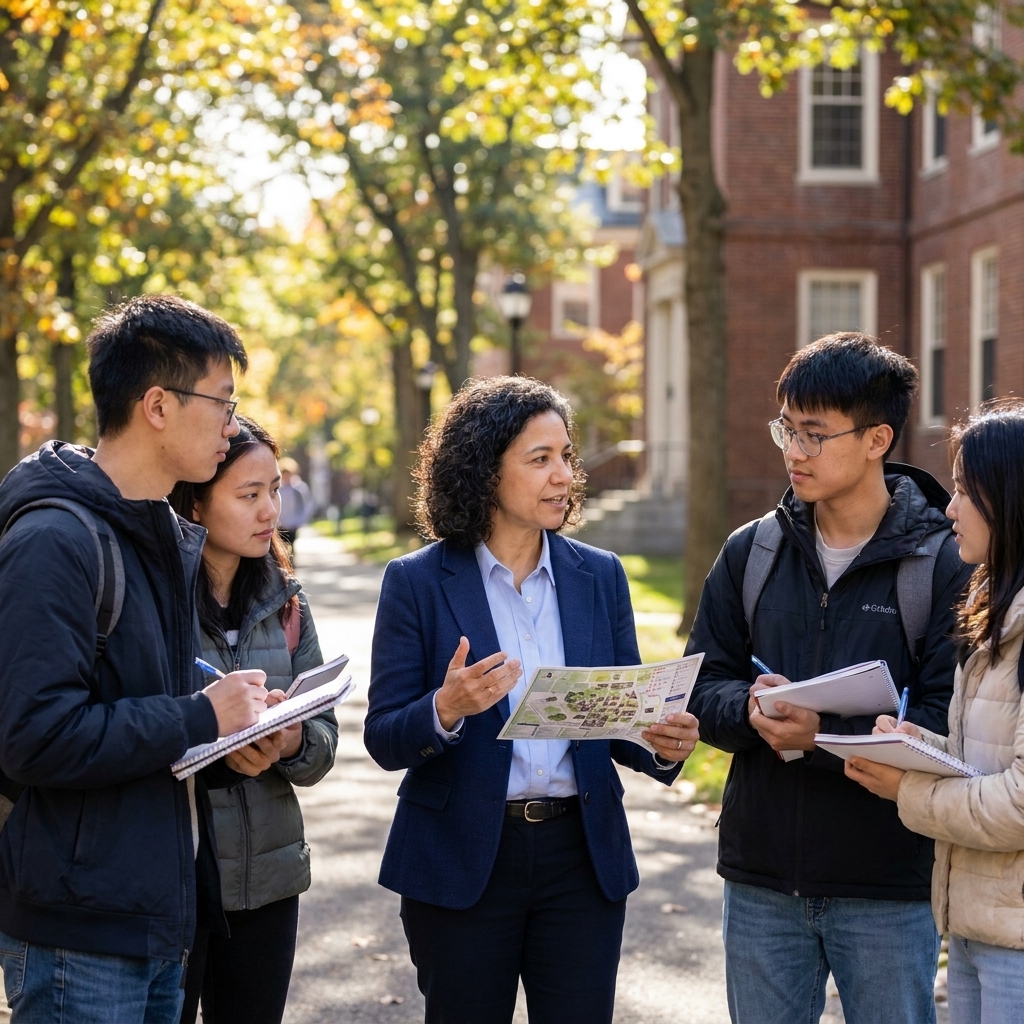
How US admissions works for international students
Most US colleges evaluate international applicants using the same core areas they use for domestic students, with a few extra requirements:
- Academic record: your secondary school transcripts and course rigor.
- English proficiency: typically TOEFL, IELTS, or Duolingo English Test.
- Standardized tests: SAT or ACT may be optional, depending on the school. Some programs still recommend them.
- Application materials: essays, recommendations, activities list, and sometimes an interview.
- Financial documentation: many colleges require proof you can pay, and aid for international students varies widely.
- Immigration steps: after you accept an offer and receive your I-20, you can apply for an F-1 student visa (most common) to enter the US and begin your program.
Key vocabulary you will see everywhere: undergraduate (bachelor’s degree), graduate (master’s/PhD), need-aware (financial need can affect admissions), need-blind (need does not affect admissions decisions at some schools, often not for internationals), I-20 (document to apply for an F-1 visa).
Choose the right application pathway
First-year (freshman) applicant
You apply directly from secondary school (or after a gap year) and plan to start a bachelor’s program in the US.
Transfer applicant
You already started college elsewhere and want to transfer credits to a US institution. Transfer policies vary a lot. Check credit transfer rules and program prerequisites early.
Community college to university pathway
This can be a cost-effective and supportive route. Many students complete two years at a community college, then transfer to a four-year university to finish their bachelor’s degree. Not every community college has the same transfer guarantees, so confirm agreements early.
Conditional or pathway programs
Some universities offer “bridge” options for students who need additional English support or academic preparation before starting full-time degree coursework. These can be a strong fit if your grades are solid but your English scores are still developing.
Build a balanced college list (and avoid common traps)
In my experience, international applicants often make one of two mistakes: applying only to famous, ultra-competitive schools, or applying only based on tuition price without checking scholarship availability and support services.
What to research for every school
- Admissions selectivity: acceptance rates can be misleading, so also look for international student stats when available.
- English proficiency options: accepted tests, minimum scores, and whether the school offers waivers.
- Financial aid for international students: merit scholarships, need-based aid, and whether the school is need-aware for international applicants.
- Total cost of attendance: tuition plus housing, meals, insurance, fees, and travel.
- International student support: orientation, advising, visa compliance help, tutoring, and career services.
- Internship outcomes: especially if you hope to use CPT/OPT later.
My practical rule: build a list with at least 2 likely, 3 match, and 2 reach schools. If you need significant funding, widen the list and include schools known for international scholarships.

Application rounds
US colleges may offer multiple deadlines. The names vary, but the most common are:
- Early Decision (ED): usually earlier and binding. If admitted, you are expected to enroll and withdraw other applications. This can be risky if you need to compare financial aid offers, so read the policy carefully.
- Early Action (EA): usually earlier and typically not binding. You can apply to multiple schools and decide later.
- Regular Decision (RD): later deadline with decisions released in the spring for fall entry.
If finances are a major factor, you want clarity. Ask: “If I apply early, will I receive a full financial aid decision early enough to make a responsible choice?”
English proficiency exams: TOEFL, IELTS, and alternatives
Most US colleges require proof of English proficiency unless you qualify for a waiver. Requirements vary by institution and sometimes by program.
Common accepted tests
- TOEFL iBT: widely accepted. Some schools set minimums for each section.
- IELTS Academic: also widely accepted.
- Duolingo English Test (DET): accepted by many universities, but not all. Always confirm.
- PTE Academic: accepted by some schools.
When you might get a waiver
Some colleges waive the requirement if you:
- Completed multiple years of full-time instruction in an English-medium school, or
- Earned certain scores in AP/IB English, or
- Completed a qualifying US-based program (rules vary).
Important: “English-medium” policies can be strict. If your school taught most subjects in English but official documentation is unclear, ask your school counselor for a letter describing the language of instruction.
Score planning tips
- Take your exam early enough to retake if needed.
- Build your school list around realistic score goals.
- If your score is just below a posted minimum, some universities offer conditional admission or intensive English options, while others treat minimums as firm. Ask before assuming.
Transcripts and credential evaluation
US colleges want to understand what you studied, how challenging it was, and how your grades compare in your local context. Because grading systems differ worldwide, some schools request an outside evaluation.
What to prepare
- Official transcripts from all secondary schools attended (and colleges, if transferring).
- Certified translations if documents are not in English.
- School profile if available: grading scale, curriculum, course offerings.
- Exam results as relevant: A Levels, IB, CBSE/ICSE, WAEC, GCSEs, national leaving exams, etc.
Credential evaluation agencies
Some universities require evaluation from approved services. Requirements differ, so do this step only after checking your school’s instructions. Commonly referenced credential evaluators include members of professional associations like NACES or AICE, but the key is always the college’s own approved list.
Timing note: evaluations can take weeks. If a school requires it, treat it like a deadline-sensitive task, not an optional extra.
Standardized testing: SAT/ACT
Many US colleges are test-optional, meaning you can apply without SAT or ACT scores. But “test-optional” does not always mean “test-irrelevant.”
Should you submit SAT/ACT?
- Submit if your score is strong for that college and helps show readiness, especially if your school’s grading system is unfamiliar to US readers.
- Consider not submitting if your score is not competitive and the college truly has a holistic review process.
For some majors, especially engineering, computer science, or pre-med tracks, admissions teams may look closely at math preparation through grades, coursework, and sometimes test scores.
AP, IB, A Levels, and other curricula
Advanced coursework can strengthen your application and may earn college credit after you enroll. Credit policies vary by university and sometimes by department, so check each school’s credit chart.
Application pieces
Application platforms
Many students apply through the Common App, Coalition Application, or a university’s own portal. The platform is just the container. The real work is your materials.
Personal essay
Your goal is not to sound impressive. Your goal is to sound real, reflective, and specific. Admissions readers want to understand how you think, what matters to you, and what you might contribute.
Essay tip I gave my students for years: choose one story, then pull out the meaning. A list of achievements is better placed in your activities section.
Supplemental essays
These often ask “Why this college?” or “Why this major?” Strong answers include specific programs, classes, clubs, labs, professors, or campus resources and connect them to your goals.
Letters of recommendation
Choose recommenders who know your learning habits and character, not just your job title or status. In many countries, teacher recommendations are not typical. If that is true for you, give your teachers a short “brag sheet” with:
- classes you took with them and major projects
- your academic goals
- examples of growth or resilience
- activities that show leadership or service
Activities list
US applications value depth and consistency. Family responsibilities, part-time work, caring for siblings, or supporting a family business are valid and important activities. Explain them clearly.
Interviews
Some schools offer interviews, but not all students will have access to one. Availability can depend on your region and the college’s staffing. If an interview is offered, treat it as a conversation: be ready to explain your academic goals and why you are a good match for that campus.
Money matters: costs, scholarships, proof of funds
Finances are often the most stressful part for international families. Let’s make the categories clear.
Understand the full cost of attendance
- Tuition and fees
- Housing and meals
- Health insurance (often required)
- Books and supplies
- Transportation and personal expenses
Financial aid types for international students
- Merit scholarships: based on academics, leadership, talent, or other achievements.
- Need-based aid: based on your family’s ability to pay, and often limited for international applicants.
- Outside scholarships: offered by organizations, foundations, or community groups. Be cautious and avoid any scholarship that requires large upfront fees.
Common financial aid forms
- FAFSA: generally not for international students (it is for US citizens and certain eligible noncitizens).
- CSS Profile: used by some private colleges to award institutional aid, including for some international applicants.
- School-specific forms: many universities use their own financial aid application for international students.
Proof of funds
Many colleges require documentation showing you can cover costs before they issue your I-20. This can include bank statements, sponsor letters, or approved forms. Requirements differ by school, so follow their instructions exactly and plan time for translations and official documents.
A concrete example: a school may ask for a recent bank statement showing funds at or above the first-year cost of attendance, plus a sponsor letter if the account is not in your name. Some schools also ask you to show how you plan to cover future years.
If funding is a key factor, prioritize schools that are transparent about international scholarships and that publish clear costs. Ambiguity is expensive.
Your admissions timeline
Deadlines differ, but most students apply for fall entry (August or September start). Use this as a planning framework and adjust to your schools’ dates.
18 to 12 months before enrollment
- Research majors and create a balanced college list
- Confirm English proficiency requirements
- Plan SAT/ACT (if taking) and your English test date
- Start a resume of activities, awards, and responsibilities
12 to 9 months before enrollment
- Draft your personal essay
- Request recommendation letters
- Order transcripts and confirm translation needs
- Check whether credential evaluation is required
9 to 6 months before enrollment
- Finalize essays and submit applications (early deadlines are often in November)
- Submit test scores if required
- Complete financial aid forms if the school requires them for international students
6 to 3 months before enrollment
- Review admissions decisions and scholarship offers
- Choose a school and complete enrollment steps (deposit if required)
- Submit proof of funds and passport information for the I-20
3 to 0 months before enrollment
- Receive your I-20
- Pay the SEVIS fee (required for most F-1 students)
- Complete DS-160, pay the visa application fee, and schedule your embassy appointment
- Attend your visa interview
- Arrange housing, health requirements, and travel
Student visa basics
Most international undergraduates in the US study on an F-1 visa, although some students may be on J-1 exchange visas or dependent statuses. The overall flow for F-1 looks like this:
- Get admitted and accept the offer (and complete any enrollment confirmation the school requires).
- Provide financial documents so the school can issue your I-20.
- Check your I-20 carefully: your name, birthdate, program dates, and funding should match your documents. If funding or details change, schools may issue an updated I-20. Keep your records consistent.
- Pay the SEVIS fee (the US system that tracks student visa records).
- Complete the DS-160, pay the visa application fee, and schedule your embassy or consulate interview through their system.
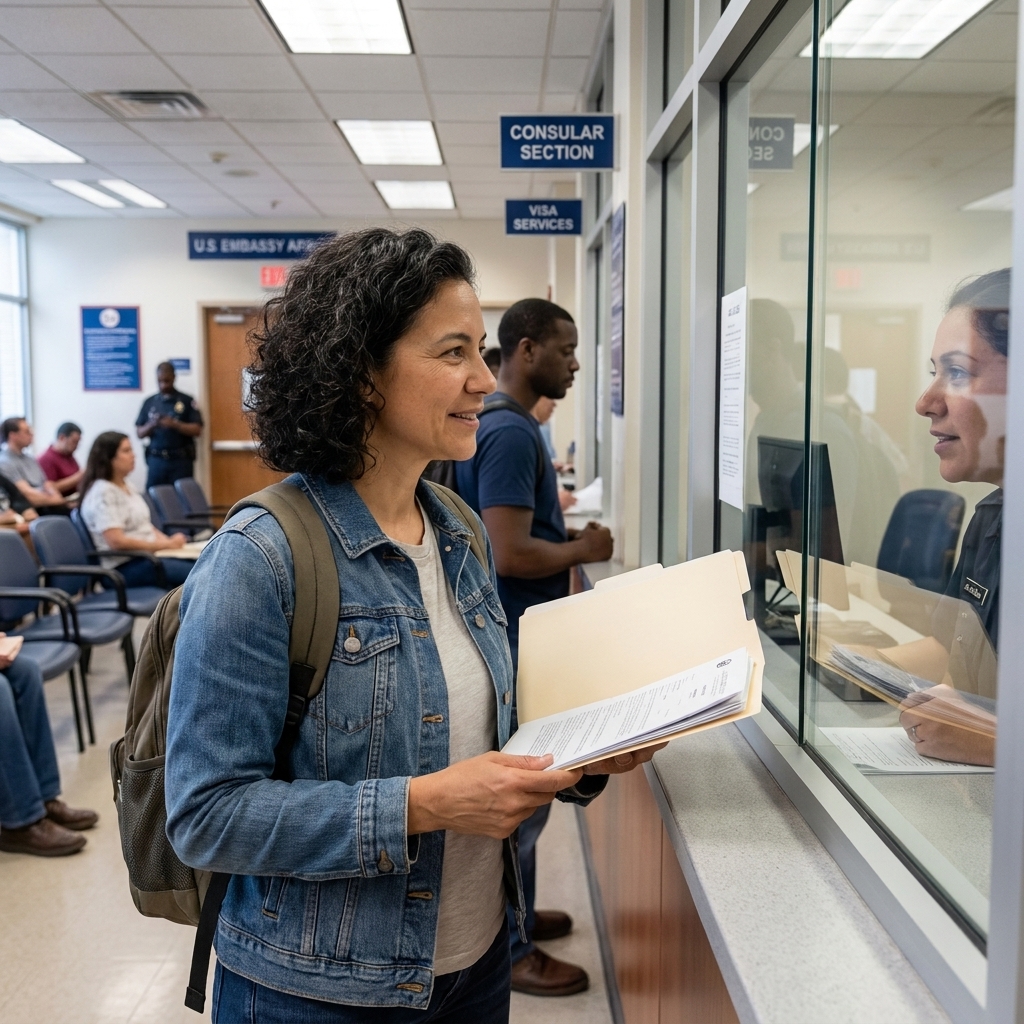
- Attend your visa interview with required documents.
Timing detail many families miss: F-1 students can typically enter the US up to 30 days before the program start date listed on the I-20.
Important: Follow instructions from your university’s international student office and your local US embassy or consulate. Requirements and appointment availability can vary by country.
What visa officers often look for
- Clear academic purpose: why this program, why this school.
- Financial preparedness: credible plan to pay for school and living costs.
- Ties and intent: F-1 is a nonimmigrant visa. Be prepared to explain your plans and connections at home in an honest, consistent way.
- Strong documentation: organized paperwork that matches what you stated on forms.
Work rules on F-1
F-1 rules are specific, and your international student office should be your source of truth. At a high level:
- On-campus work is often allowed up to 20 hours per week while school is in session (and more during official breaks, depending on rules and your school’s policies).
- Off-campus work is generally not permitted without authorization.
- CPT (Curricular Practical Training) is typically tied to an internship or practicum that is integral to your program.
- OPT (Optional Practical Training) is work authorization often used after completing your degree (and sometimes pre-completion, with restrictions).
After acceptance
Confirm your spot
Once you decide, complete your enrollment steps promptly: deposit (if required), housing forms, immunization records, placement tests, and orientation registration.
Plan for health insurance and medical requirements
Many universities require specific vaccinations and proof of insurance. Start early since medical records may need translation or additional appointments.
Prepare for your first weeks
- Bring copies of key documents (passport, visa, I-20, admissions letter, financial documents)
- Learn your campus support offices (international student office, tutoring center, counseling services)
- Practice everyday academic language: office hours, syllabus, credit hours, registrar
And one more mentor note: the transition is real. Culture shock can happen even when you are excited. Give yourself time to adjust and use the support systems your school offers.
Common pitfalls
- Missing deadline details: some schools have earlier deadlines for scholarships or housing, not just admissions.
- Underestimating total cost: include insurance, travel, and living expenses.
- Waiting too long for testing: build in time for retakes and score reporting.
- Assuming “test-optional” means “no pressure”: strengthen other parts of your application if you are not submitting scores.
- Ignoring email and portals: universities communicate through portals with specific tasks and document requests.
- Using generic essays: vague writing rarely helps. Specificity is your advantage.
- Trusting guarantees: avoid anyone who promises admission, a visa, or a scholarship in exchange for money. And never submit fake documents or altered financial statements. It can lead to denial, revoked admission, and long-term visa consequences.
International admissions checklist
- Balanced college list with confirmed requirements
- Application round plan (ED, EA, RD) that fits your financial reality
- English proficiency test plan (plus retake buffer)
- Transcripts and translations ready
- Credential evaluation completed if required
- Essays and recommendations submitted
- Financial aid forms completed (CSS Profile or school forms if required)
- Financial documentation prepared for I-20 issuance
- I-20 received and reviewed for accuracy
- SEVIS fee paid, DS-160 completed, visa application fee paid, interview scheduled
- Housing, insurance, and health requirements handled
FAQ
Do US colleges accept IELTS instead of TOEFL?
Yes, many do. Verify accepted tests and minimum scores on each college’s admissions page, because policies vary by campus and program.
Do I need SAT or ACT as an international student?
Not always. Many schools are test-optional. If you have a strong score, it can help. If you do not, focus on grades, course rigor, essays, and English proficiency.
Will I need a credential evaluation?
Some colleges require it, others do not. Check each school’s instructions carefully before paying for an evaluation.
When should I start the visa process?
After you receive your I-20 from the university. In most cases you will pay the SEVIS fee, complete DS-160, pay the visa application fee, and schedule your interview as soon as appointments are available and you are eligible to apply.
Can I work while studying on an F-1 visa?
Often yes, but within limits. Many students can work on-campus up to 20 hours per week while classes are in session. Off-campus work usually requires authorization such as CPT or OPT. Your international student office is the correct place to confirm what applies to your situation.
A final encouragement
If you are feeling overwhelmed, you are not behind, you are just looking at a complex system all at once. Break it into lanes: academics, testing, application materials, finances, and visa steps. Tackle one lane per week, keep a simple spreadsheet, and ask questions early. You deserve clarity, and you deserve options.
A simple weekly plan (example): Monday for school research, Tuesday for testing prep, Wednesday for essays, Thursday for documents and forms, Friday for finances and scholarship searches, weekend to review and catch up.