
If you have ever opened a language app after a long workday and thought, “I’m too tired for this,” you are not alone. The good news is that, for most adult learners, language learning does not require marathon study sessions to work. It requires consistency, smart tool choices, and a plan that respects your energy and your calendar.
In this guide, I will walk you through a structured approach that uses three pillars: a strong app routine, targeted speaking practice with a tutor or partner, and immersion through media you actually enjoy. You will build a sustainable system that fits full-time work, not a fantasy schedule.
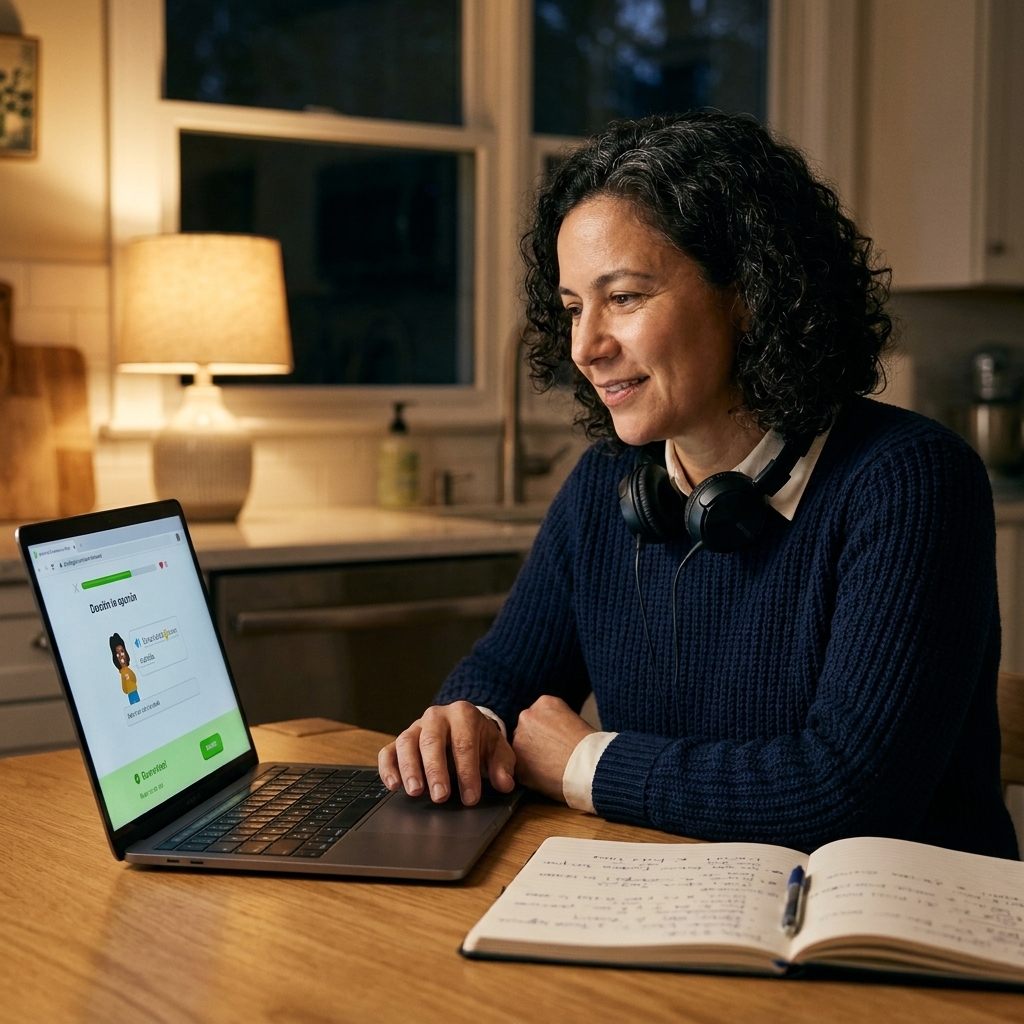
Start with a clear goal
“Learn Spanish” is inspiring, but it is not actionable. A good goal tells you what you want to do with the language and how soon you need it.
Pick a purpose first
- Travel: ordering food, asking for directions, checking in, small talk
- Career: industry vocabulary, email templates, meeting phrases, presentations
- Family and community: conversation, listening comprehension, cultural fluency
- Academic: reading, writing, test preparation, formal grammar
Choose a realistic 8- to 12-week target
When you work full-time, shorter goal cycles help you stay motivated. Examples:
- Hold a 10-minute conversation about your day
- Understand about 70 percent of a beginner podcast episode
- Write a simple work email without translating every word
- Complete one A1 or A2 course track in your app
A goal that fits your real week will beat an ambitious goal that depends on a perfect week.
Build your language stack
Most overwhelmed learners are not lazy. They are using too many tools at once. Instead of trying five apps, two textbooks, and three YouTube channels at the same time, aim for a simple stack you can maintain.
Tool 1: One core app
Your core app should be the one you open on autopilot. Look for structured lessons, spaced repetition, and short sessions. Popular options include Duolingo, Babbel, Busuu, Memrise, and similar platforms.
- Use it for: daily practice, vocabulary, basic grammar patterns, habit building
- Avoid using it for: your only speaking practice
Tool 2: Tutor or partner
Speaking is the skill most full-time workers delay, and it often accelerates your progress because you get feedback in real time and practice retrieving words under pressure. Online tutoring platforms and language exchanges make this accessible even with a tight schedule.
- Use a tutor for: pronunciation feedback, targeted corrections, confidence, structured conversation
- Use a partner exchange for: casual conversation, cultural practice, low cost speaking time
If weekly tutoring feels expensive, consider shorter sessions. Two 25-minute sessions can be more effective than one long one because you get more frequent retrieval practice and feedback, especially when your brain is tired after work.
A simple tired day tutor agenda (25 minutes):
- 5 minutes: warm-up questions (weekend, weather, plans)
- 10 minutes: one repeatable prompt (see below)
- 5 minutes: “high value” corrections and a quick pronunciation fix
- 5 minutes: recap and 3 takeaways to practice this week
Tool 3: Immersion media you enjoy
Immersion does not have to mean moving abroad. It can mean turning your existing entertainment into a language routine.
- Listening: beginner podcasts, slow news, music playlists
- Watching: short episodes, YouTube channels, familiar shows rewatched in the target language
- Reading: graded readers, simple newsletters, kids’ stories, short articles
Quick check for level-appropriate input: choose something where you can follow the main idea without pausing every sentence. If you feel completely lost after one minute, it is probably too hard for your current level. Save it for later and pick an easier source so you can build momentum.
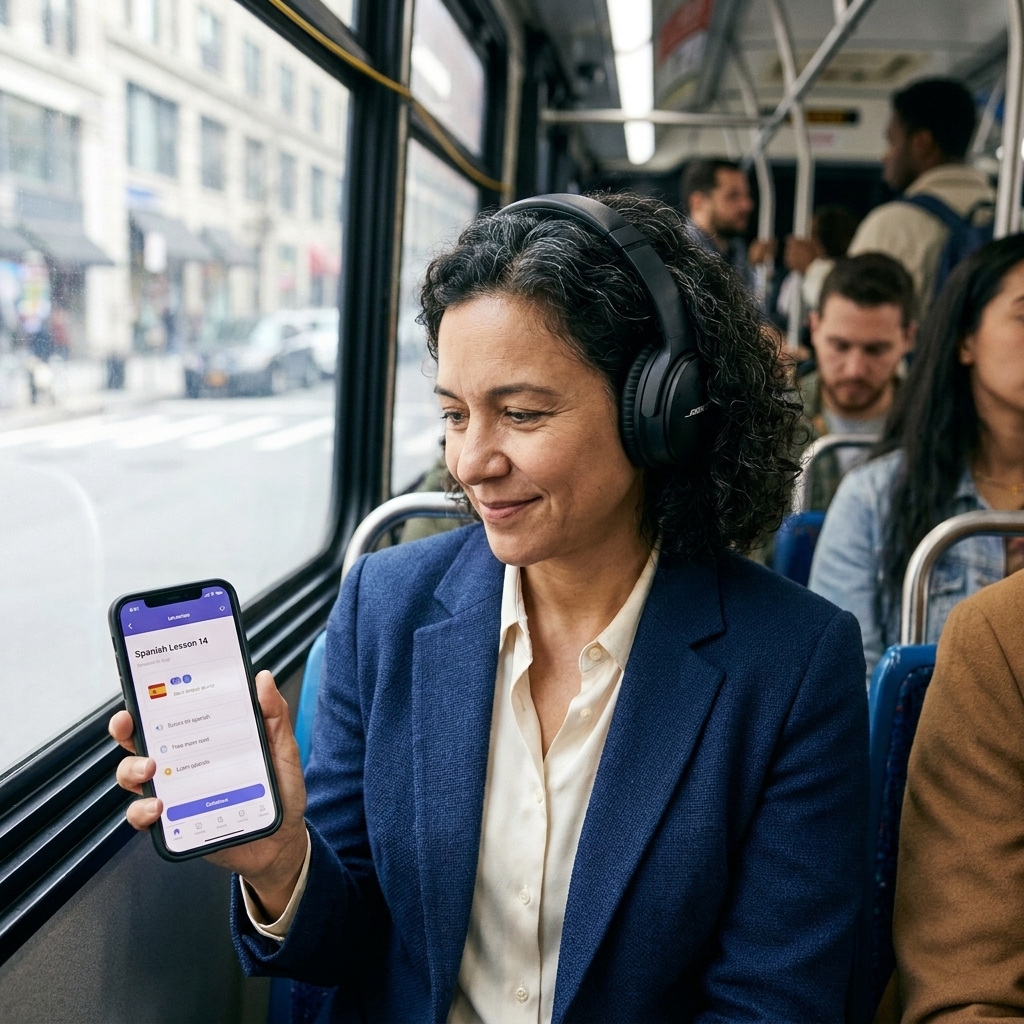
A weekly plan that works
Let’s make this concrete. Here is a schedule that works well for many full-time professionals. Adjust the minutes, but keep the structure.
The 5-2 routine
This is five short weekday sessions plus two longer sessions (one on a weekday, one on the weekend).
Think of this as 20 to 25 minutes on weekdays plus two longer blocks across the week.
- Monday to Friday: 10 to 15 minutes core app + 10 minutes immersion listening
- One weekday evening: 25 to 45 minutes tutor session or language exchange
- Saturday: 30 minutes “deep dive” (review notes, write a short journal entry, practice speaking prompts)
- Sunday: a fun immersion block (movie, episode, or long podcast) with light note-taking
If your weekdays are chaotic
Use a minimum viable routine: 7 minutes daily. Seriously. When you keep the habit alive, it is much easier to scale back up when work calms down.
- 3 minutes: flashcards or app review
- 2 minutes: speak out loud using a prompt
- 2 minutes: listen to a short clip and catch one phrase
Make speaking easier
Many adults avoid speaking because they do not want to feel “bad” at something. As a former classroom teacher, I can tell you this is normal, and also fixable. In my classes, the students who improved fastest were not the ones who knew the most vocabulary. They were the ones who got comfortable speaking before they felt ready.
Use repeatable prompts
Keep a small set of prompts you can reuse each week. Repetition is not boring. It is how fluency is built.
- Describe your morning routine
- Summarize your workday
- Talk about weekend plans
- Explain a hobby
- Tell a simple story from childhood
Ask for high-value corrections
If your tutor corrects every tiny mistake, you may feel discouraged. Instead, ask them to focus on:
- Errors that change meaning
- Pronunciation habits that block understanding
- Two or three repeat mistakes to fix this week
Record yourself weekly
This is a reliable way to notice progress because it makes improvement audible. Record a 60-second voice memo answering the same prompt each week. You will hear your confidence grow.
Vocabulary for busy adults
Vocabulary is not about collecting words. It is about being able to retrieve the right word when you need it. For working adults, this means learning words in chunks and in context.
Focus on phrases
- Instead of “meeting,” learn “I have a meeting at…”
- Instead of “help,” learn “Can you help me with…”
- Instead of “problem,” learn “There is a problem with…”
Use spaced repetition
If your app includes review scheduling, use it. If you prefer flashcards, keep the set small. Ten new items a day is often plenty for many learners, especially when you are also working on listening and speaking. If that feels heavy, cut it to five and stay consistent.
Build a work and life word bank
Make two lists:
- Life: groceries, family, hobbies, health, daily routines
- Work: your tools, your role, your common tasks, meeting phrases
Your language should reflect your actual conversations, not a generic textbook life.
Immersion without homework
Immersion works best when it feels enjoyable. The trick is to choose one small technique so you stay engaged instead of overwhelmed. Also, you do not need to take notes every time. Some days, “just watch” counts.
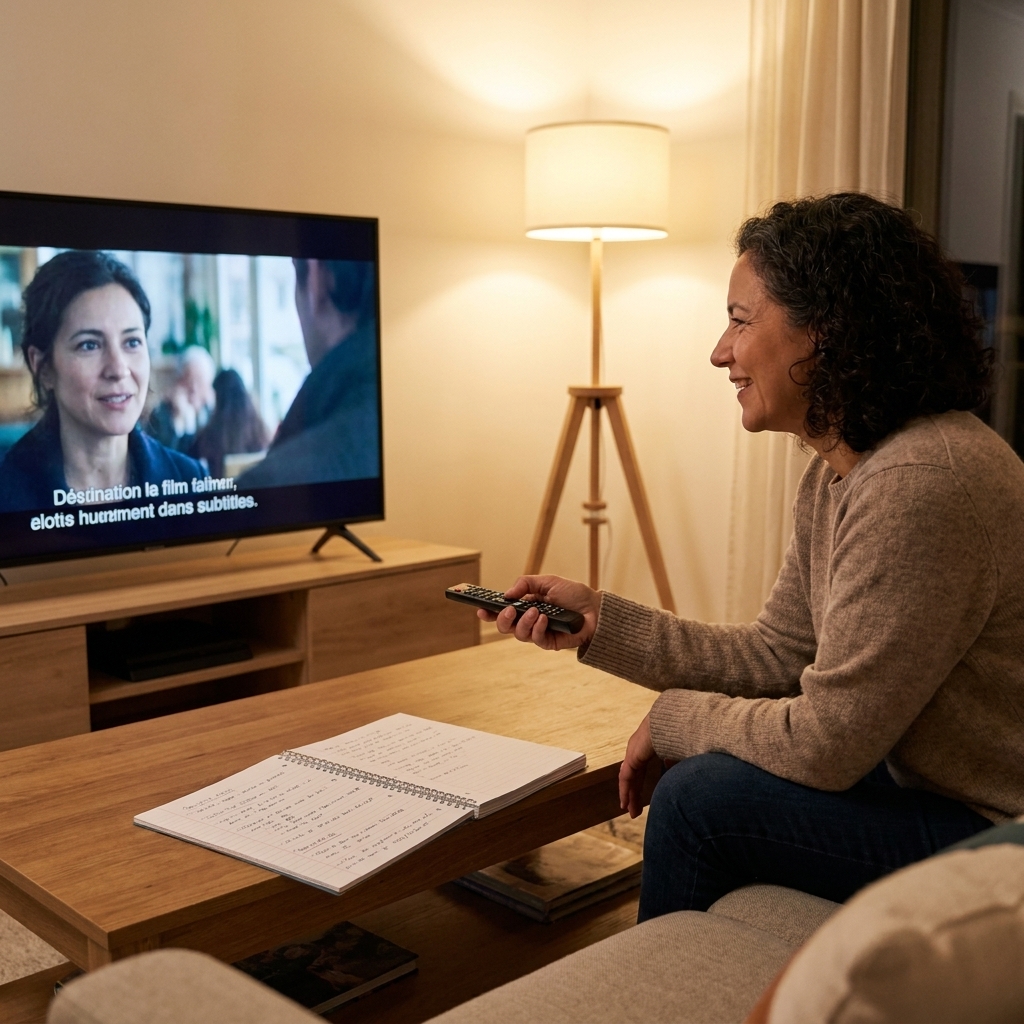
One scene, three passes
- Pass 1: watch with target-language audio and subtitles in your native language
- Pass 2: watch again with target-language subtitles
- Pass 3: watch the same scene without subtitles and repeat two lines out loud
This can be done with a 2- to 4-minute scene, which makes it manageable on a weekday.
Use commute and chores
If you drive, do dishes, or walk regularly, pair that time with listening. Keep a playlist ready so you do not have to decide what to play when you are tired.
Track progress
App streaks are helpful, but they do not always reflect real ability. I recommend tracking three types of progress.
1) Habit progress
- Days practiced this week
- Minutes spoken this week
- Media minutes listened or watched
2) Skill progress
- Can you introduce yourself smoothly?
- Can you understand a short voicemail or audio message?
- Can you order food without switching languages?
3) Confidence progress
Once a week, rate your comfort speaking from 1 to 5. Confidence is a real metric because it predicts whether you will keep going.
Roadblocks and fixes
“I do great for two weeks, then I stop.”
Plan for your busy season. Create a fallback routine that is tiny but consistent. Put it on your calendar like a meeting, and tie it to an existing habit like coffee or brushing your teeth.
“I understand a lot, but I cannot speak.”
Increase speaking frequency, not speaking length. Aim for 5 minutes of speaking daily, even if it is alone. Narrate what you are doing, or answer a prompt into a voice memo.
“I keep forgetting words.”
This is normal. Words need multiple encounters in multiple contexts. Choose fewer new words per week and use them in sentences out loud. Retrieval practice is what makes words stick.
“I feel silly making mistakes.”
Reframe mistakes as data. When you make the same mistake twice, you have identified your next mini lesson. That is progress, not failure. Also, watch for perfectionism. It is one of the fastest paths to burnout, especially for high-performing adults.
A simple 30-day plan
If you want a ready-to-use starting point, here is a simple 30-day structure. You can repeat it with new topics each month.
Week 1: Foundation
- Choose your core app and one immersion source
- Practice daily for 10 to 15 minutes
- Schedule your first tutor or exchange session
Week 2: Listening and pronunciation
- Add 10 minutes of listening most days
- Start a weekly 60-second voice memo
- Ask your tutor for pronunciation targets
Week 3: Speaking reps
- Two short speaking sessions this week if possible
- Use the same prompts and repeat them
- Write 5 useful work or life phrases and practice them out loud
Week 4: Real-world use
- Do one “real task” in the language: order, book, message, comment, or call
- Watch one longer piece of media for enjoyment
- Review your recordings and notice what improved

FAQ
How long does it take if you work full-time?
It depends on the language, your starting point, and how much you practice. If you are learning a language closely related to your native language and you practice consistently (for example, 20 to 45 minutes most days plus weekly speaking), many learners reach a basic level of conversational comfort in a few months. By “basic,” I mean you can handle predictable topics (introductions, daily routines, simple errands) with pauses and occasional rephrasing.
If you are learning a more distant language, expect a longer runway. A rough mental model is that it can take two to four times longer to reach similar comfort, depending on the language pair and your weekly hours. That is not you failing. It is just a different difficulty curve.
Apps or online classes?
For most busy adults, an app is excellent for daily structure, and a tutor or class is best for speaking and feedback. The most effective approach is usually a combination: app for consistency, live practice for communication.
How many minutes a day?
If you can manage 20 to 30 minutes a day, you will see steady progress. If life is hectic, 7 to 10 minutes a day is still valuable because it protects the habit. The key is showing up often.
Should I learn grammar first?
Learn grammar as a support tool, not the main event. Start with useful sentence patterns, then study the grammar that explains what you are already using. This keeps learning practical and less overwhelming.
Closing encouragement
Full-time work does not disqualify you from becoming bilingual. It simply requires a different strategy, one built on small daily wins, regular speaking practice, and enjoyable immersion.
Pick your goal for the next 8 to 12 weeks, choose your three tools, and commit to a routine that fits your life. If you would like, tell me which language you are learning and what your schedule looks like, and I will help you sketch a weekly plan that feels doable.