When families tell me, “I want my child to be bilingual, but I am not fluent,” I always respond with the same reassurance: you can still be an excellent language guide. In elementary school, the goal is not perfect grammar. It is comfort, curiosity, and consistent exposure.
Think of a second language like music in your home. If it shows up in small, predictable ways every day, your child starts to recognize patterns, join in, and eventually create their own “songs.” Below are practical routines and resources that work whether you speak the language confidently or you are learning alongside your child.
Start with the right goals
Elementary students learn best through repetition, play, and meaning. Before you buy a stack of workbooks, decide what “success” looks like for your family in the next 8 to 12 weeks.
Healthy, realistic goals
- Kindergarten to grade 2: Understand and use short phrases (greetings, colors, foods, feelings), sing songs, recognize a few written words.
- Grades 3 to 5: Hold simple conversations, read very short books with support, write a few sentences, understand slow, clear audio.
A helpful mindset is comprehension first. Many children understand a lot before they speak much, and that is normal. If your child is quiet at first, celebrate listening and noticing.
If your child hears the language often and feels safe using it imperfectly, speech usually follows. Too much pressure can lower confidence and reduce the desire to try. Supportive prompts and playful repetition tend to work better.
Pick a home plan
You do not need an all-or-nothing approach. Choose a structure you can actually sustain on busy weeks.
If you are fluent or semi-fluent
- One activity, one language: For example, breakfast is always Spanish, bedtime is always French.
- One parent, one language: If one caregiver is stronger, they use the target language consistently.
- Theme days: Mondays and Wednesdays are target language days for simple phrases and media.
If you are not fluent (most families I work with)
- Micro-immersion: Two or three short language moments daily, like greetings, snack time words, and a bedtime song.
- Audio mentor: Let high-quality recordings do most of the fluent speaking while you facilitate activities.
- Learn together: You model persistence by being a beginner too. This is powerful for kids.
When you are not fluent, your job is to be the routine builder, not the flawless speaker.
If you are unsure about a word or pronunciation, it is okay to say, “Let’s check,” and play the audio. You are teaching a skill that matters: how to verify and learn.
A 10-minute daily routine
If I could only recommend one strategy, it would be a short, daily routine you can do almost anywhere. Ten minutes a day can be enough to see small gains over time, especially when it is consistent and enjoyable.
A simple 10-minute language block
- 2 minutes: Greeting and feelings. “Hello.” “How are you?” “I am happy/tired.”
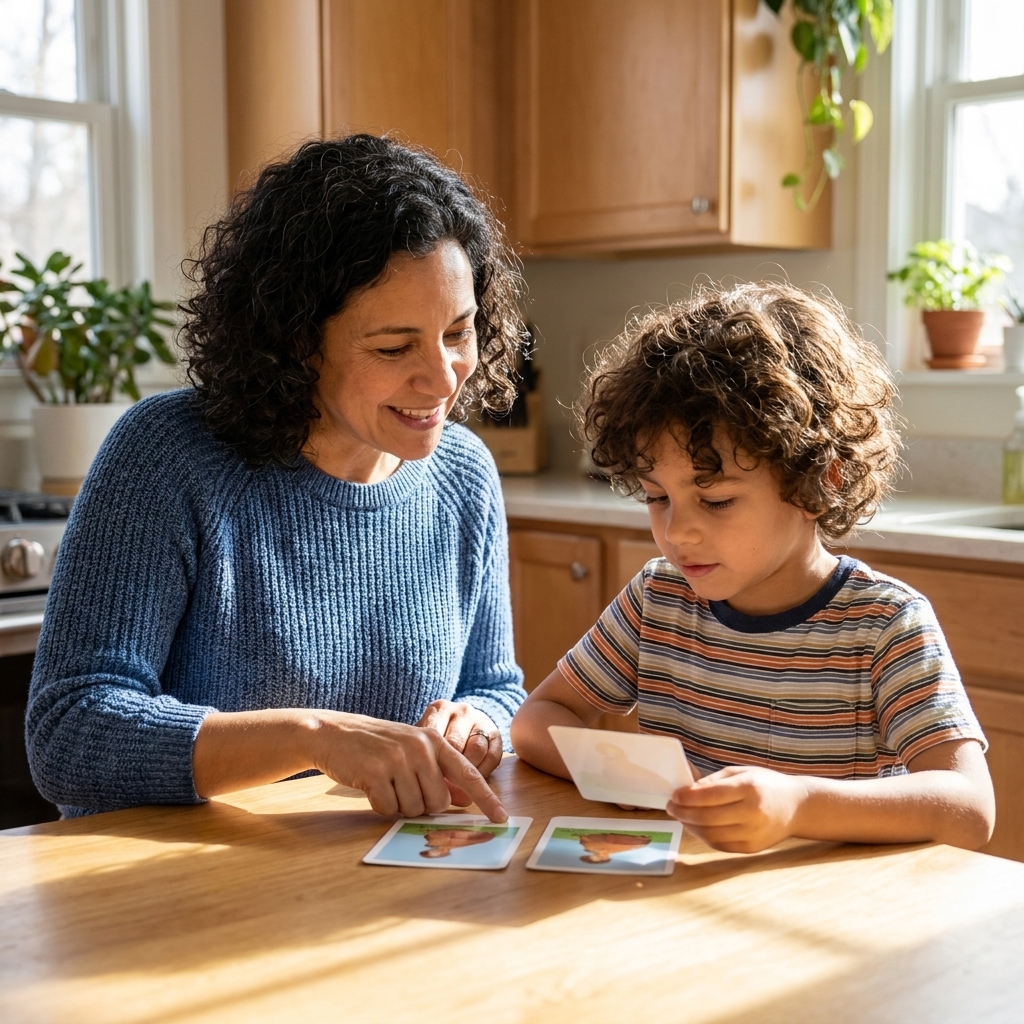
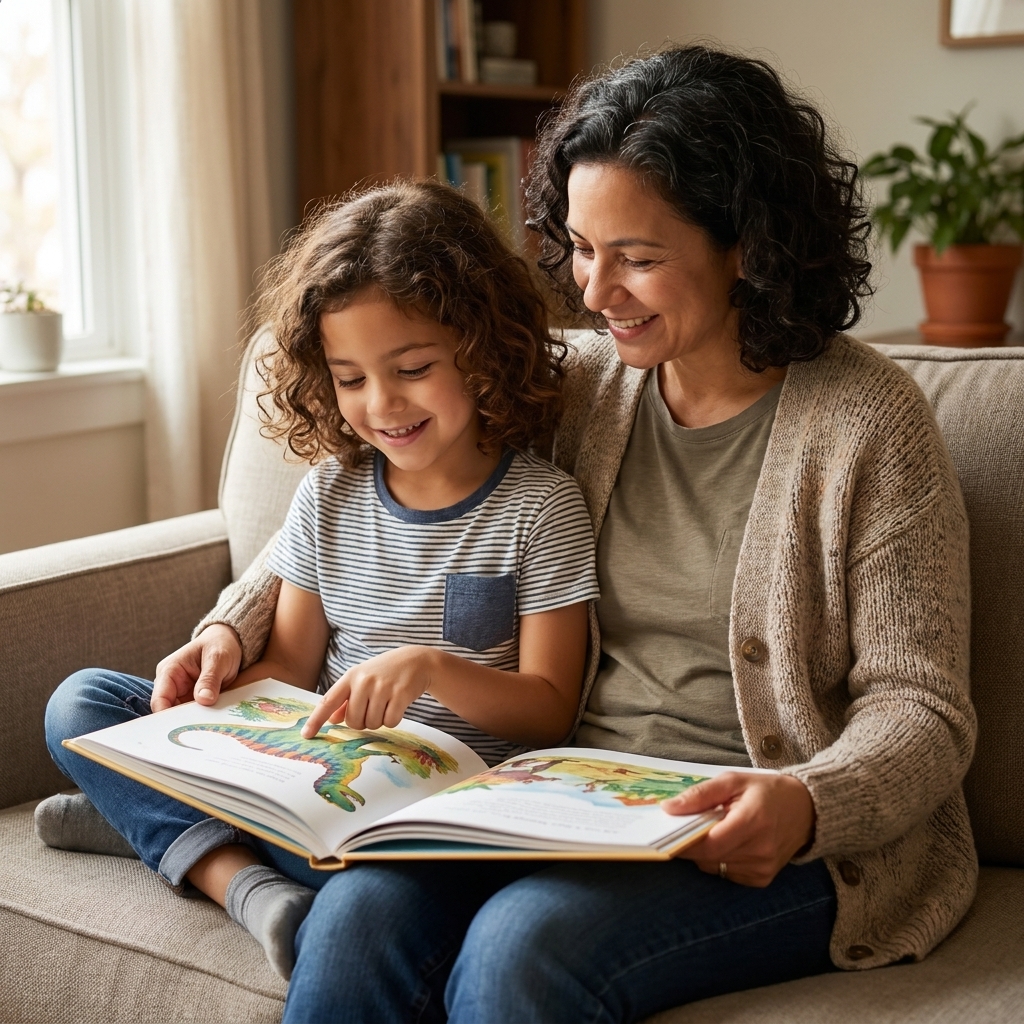
- 4 minutes: Input. A short song, a mini story video, or a few pages of a picture book.
- 3 minutes: Playful practice. Point-and-say, scavenger hunt, or acting out words.
- 1 minute: One “winning sentence” to end. “I like apples.” “I see a blue car.”
Put it on something that already happens, like right after dinner or right before brushing teeth. Habits stick best when they are attached to an existing routine.
Language in real life
Worksheets can be fine in small doses, but daily life gives you richer practice because words come with meaning. The key is to repeat the same phrases often enough that your child starts to predict them.
Easy places to add the language
- Mornings: “Good morning.” “Get dressed.” “Shoes on.”
- Meals: “Do you want milk or water?” “More, please.” “All done.”
- Clean-up: “Put away.” “In the box.” “Let’s count.”
- Car rides: Spot colors and numbers. “I see three red cars.”
- Bedtime: Same song every night, then one short phrase like “Good night, I love you.”
Tip: choose ten power phrases and repeat them daily for two weeks. Then swap in ten new ones while keeping the old favorites.
If it helps, here is what ten power phrases might look like in Spanish for a beginner family (choose any language and mirror the same categories):
- Hello, goodbye
- Please, thank you
- Yes, no
- I want ___
- More, all done
- Help me
- Where is ___?
- I like ___
- What is this?
- Good night, I love you
You do not have to translate every sentence perfectly. Start with short, useful lines you will actually say.
Make speaking feel safe
Many elementary students worry about “getting it wrong,” especially if they are perfectionists at school. Build low-pressure ways to practice.
Low-stress speaking ideas
- Choral response: Say the phrase together at the same time.
- Speak to a character: A stuffed animal “only understands” the target language.
- Echo games: You say it, your child repeats it like a sound effect.
- Choice questions: Instead of open-ended speaking, offer options. “Do you want apple or banana?”
- Act it out: Total Physical Response (TPR) works wonderfully for kids. Jump, run, sit, open, close, and laugh your way through verbs.
And yes, you can use English as a bridge. The goal is more exposure, not language policing.
Resources when you are not fluent
You are looking for resources with clear audio, kid-friendly pacing, and repetition. Mix and match, and keep what your child returns to willingly.
Apps and audio
- Duolingo ABC (early literacy): A solid option for early reading practice where it is available. Language options and availability can vary by region, so check what it supports before you commit.
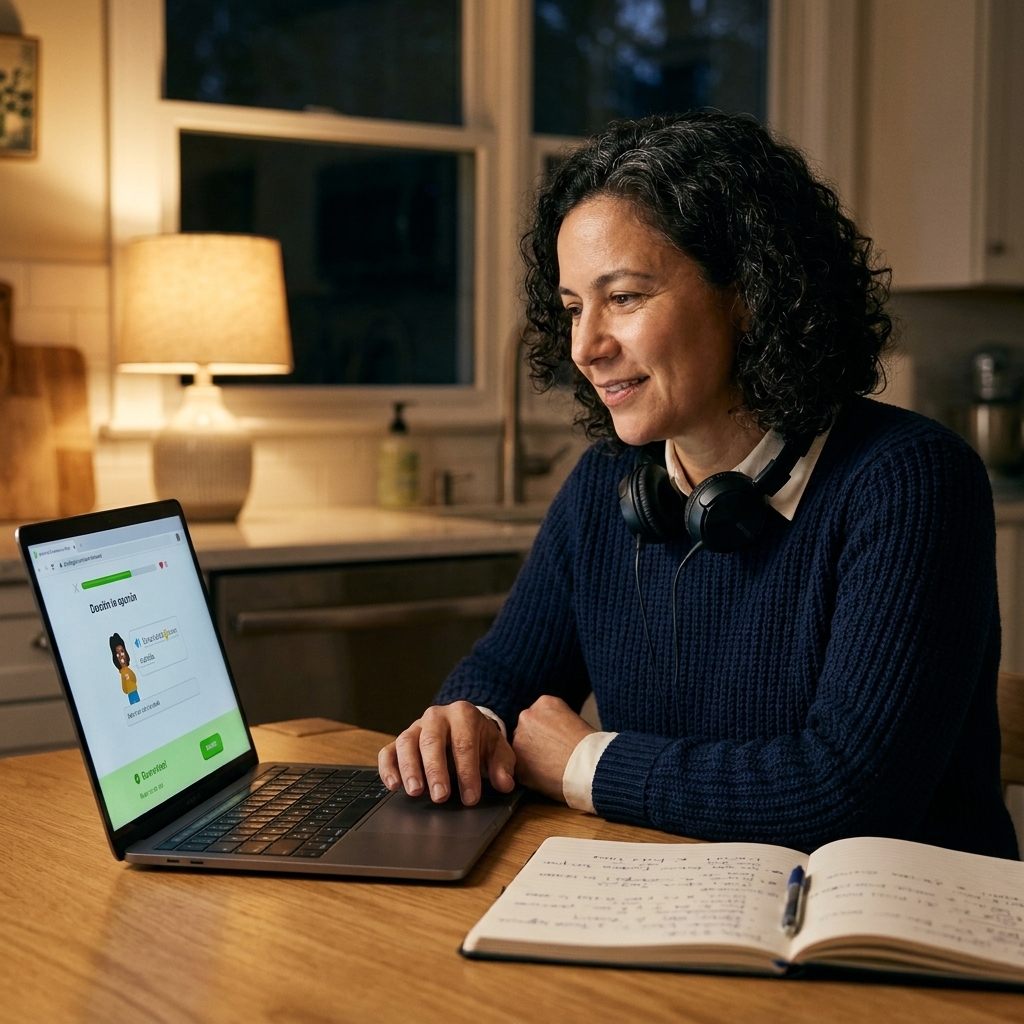
- Duolingo (older elementary with guidance): Best for short daily practice. Sit nearby so it does not become a mindless tap-through.
- Mango Languages (library access): Some public libraries offer Mango for free. It is structured, audio-rich, and practical.
- Pimsleur (audio lessons): Strong for listening and speaking, and it often works better for older elementary students and adults learning alongside kids. Some younger children find audio-only lessons challenging.
- Story podcasts for kids: Look for slow, beginner-friendly storytelling in the target language.
Books that support beginners
- Picture dictionaries: Choose one with real photos for everyday vocabulary.
- Bilingual picture books: Read in English first for comprehension, then revisit the target language pages.
- Early readers (when available): Helpful once a few sounds and words are familiar.
Video and music
- Songs with actions: Repetition plus movement builds memory quickly.
- Short cartoons: Keep episodes short and rewatch the same ones. Rewatching is a feature, not a failure.
A good rule: if a resource leaves your child frustrated or bored, it is not “rigorous.” It is mismatched. Swap it out.
Choosing the language
Families sometimes freeze here, worried about choosing “the best” language. There is no perfect choice, but there are smart considerations.
Good reasons to choose a language
- Family and culture: Heritage language connection is a powerful long-term motivator.
- Community access: Neighbors, friends, or local events where your child can hear and use it.
- School pathways: Dual-language programs, middle school offerings, or high school credit options.
- Child interest: A child who loves a culture, music scene, or sport tied to the language will practice more.
If you are unsure, try a language sampler month. Spend two weeks lightly exploring one language, then two weeks on another. Watch what your child naturally repeats and requests.
If your family already uses a heritage language at home, protect that time. Adding a new language works best when it does not replace the language that already carries your family relationships and identity.
A simple weekly schedule
You do not need hours a day. Consistency often beats intensity for elementary learners.
Light plan (20 to 30 minutes weekly)
- Daily: 5 minutes of songs or greetings
- 2 days a week: 5 to 10 minutes with an app or short video
Steady plan (45 to 60 minutes weekly)
- Daily: 10-minute routine
- Weekend: One fun exposure activity, like a library book, kids cooking video, or a cultural event
What matters most is that your child can predict when the language shows up. Predictability lowers resistance.
Common questions
Will a second language confuse my child?
For most children, no. Mixing words from both languages can happen early on, and it is a normal part of bilingual development. Over time, with enough exposure, kids learn when to use which language.
If your child already has speech or language challenges, or if you are worried about delays, it can be helpful to check in with a speech-language pathologist. Many children with speech or language needs can still become bilingual, but it is worth getting personalized guidance.
What if my pronunciation is not great?
Use audio from fluent speakers whenever you can and learn along with your child. You can also say, “Let’s check how the speaker says it,” and replay. That models a healthy learning strategy.
How long until we see progress?
You may notice more understanding within a few weeks if exposure is consistent. Speaking can take longer, especially for cautious kids. Plateaus are normal too. Track progress through small wins: recognizing words in a song, answering a choice question, or using a greeting spontaneously.
Should we correct mistakes?
Correct gently and indirectly. Instead of “No, that’s wrong,” repeat the sentence correctly and move on. For beginners, you can also model the simplest correct form.
Example: Child: “Yo gusta.” Adult: “Me gusta. Muy bien.”
Your next step
If you want to start this week, choose just three things:
- One daily time: after dinner, in the car, or before bed
- One audio anchor: a song, short story video, or app lesson
- Ten words or phrases: greetings, feelings, colors, or snack words
Then keep it light for two weeks. Your child does not need a perfect bilingual environment. They need a steady invitation to learn, and a parent who makes it feel doable.
If you have questions or want to share what is working in your house, add a note in the comments. The smallest routines are often the ones that last.