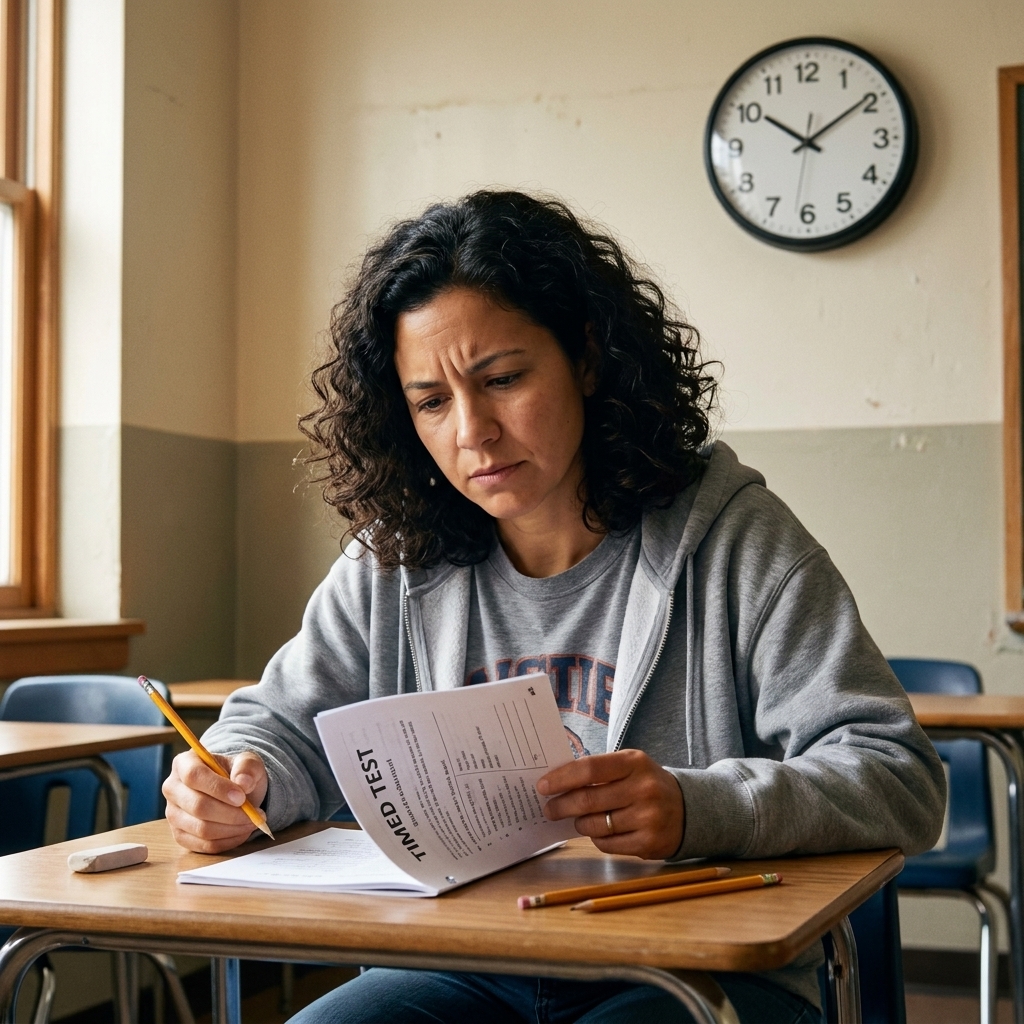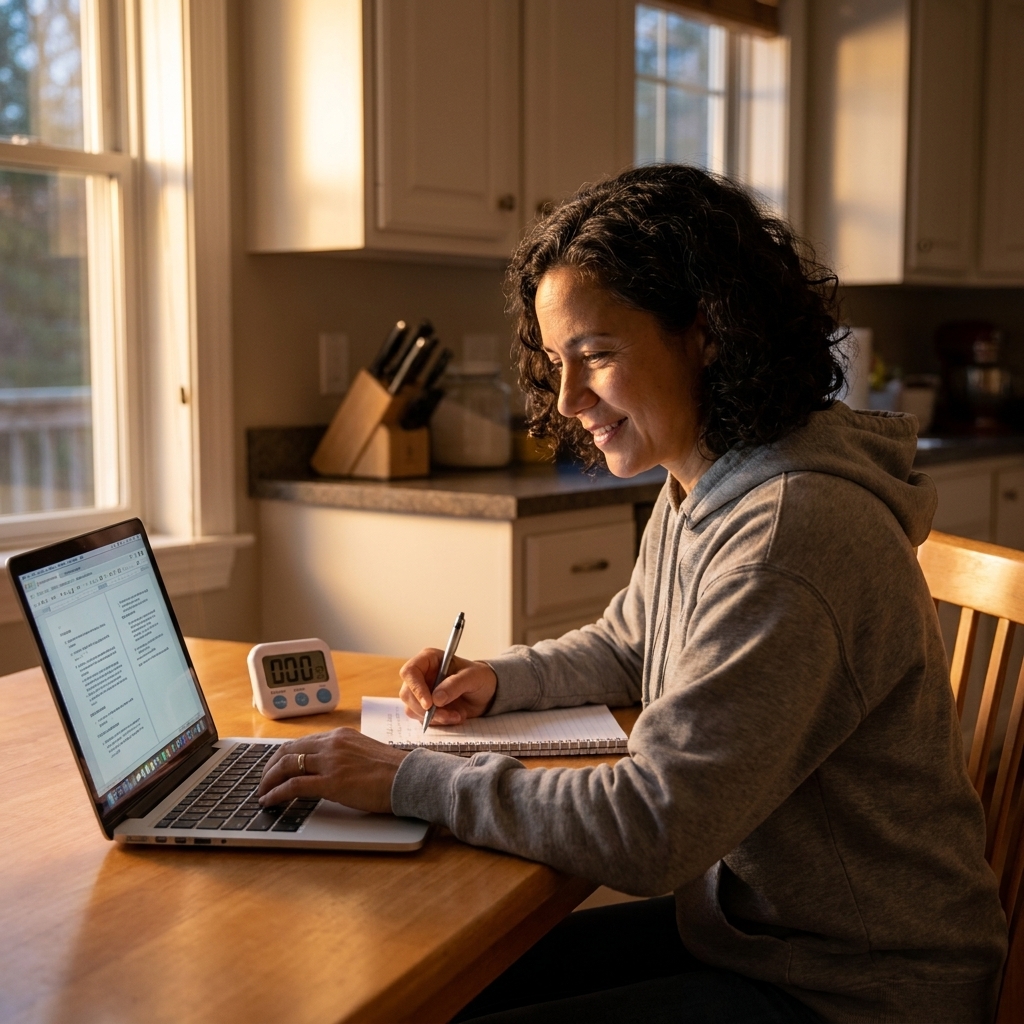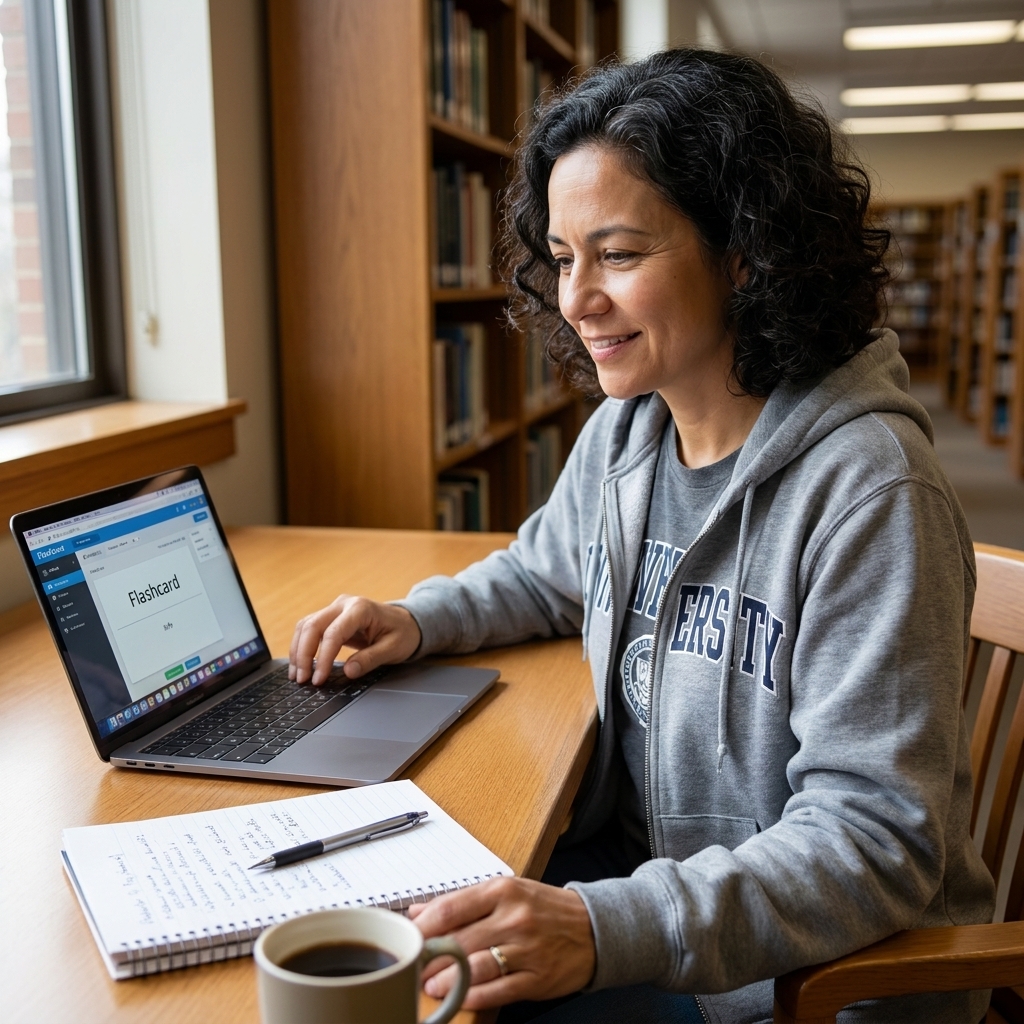
Standardized tests can make even capable students feel shaky. I have watched students freeze over questions they absolutely knew, not because they were unprepared, but because their brains were stuck in stress mode. The good news is that test anxiety is often manageable. Students can learn skills that reduce it and help them think more clearly under pressure. Severity varies, but with a few consistent routines and the right kind of practice, many students can walk into state assessments feeling steadier and more in control.
Below are seven strategies I used in my classroom and later recommended as an academic advisor. Pick two to start this week, then layer in the rest as test day gets closer.

1) Name it and normalize it
Anxiety loves secrecy. When students think, I am the only one panicking, the feeling grows. When they hear, This is a normal body response and we have tools, they can start to manage it.
What to say
- Try: “Your body is acting like this is a danger situation, but it is a challenge situation. We can teach your brain the difference.”
- Try: “Nervous and excited feel similar. Let’s call this energy and use it.”
- Avoid: “You have nothing to worry about.” (It often lands as “You do not get it.”)
A quick check-in
Use a 0 to 10 scale. Ask, “Where is your test worry right now?” Then ask, “What would help you move it down one point?” This teaches students that anxiety is not an on or off switch. It is adjustable.
2) Practice the format
One of the fastest ways to lower anxiety is to make the test feel familiar. Many students are stressed by the format more than the standards. “Standards” are the skills (like identifying the main idea or multiplying fractions). “Format” is how the test asks for them (like long passages, multi-step word problems, drag-and-drop tools, or timed sections).
How to do this at home or in a homeschool setting
- Do micro-practice 2 to 4 times a week: 10 to 15 minutes of test-like questions instead of one long weekend cram session.
- Match the tools: if the assessment is on a computer, practice on a computer sometimes. If it allows highlighting, practice highlighting.
- Teach directions as a skill: have your child underline what the question is asking before solving.
Familiarity often lowers the brain’s threat response. Think of it as gentle exposure. When students know what the screens look like, how the timer feels, and what a tricky question “sounds” like, their confidence can rise quickly.
Bonus tip: If you can, ask the teacher about test logistics (start time, breaks, calculator rules, scratch paper, headphones, and any on-screen tools like flagging questions). Uncertainty fuels anxiety.
3) Teach a silent reset
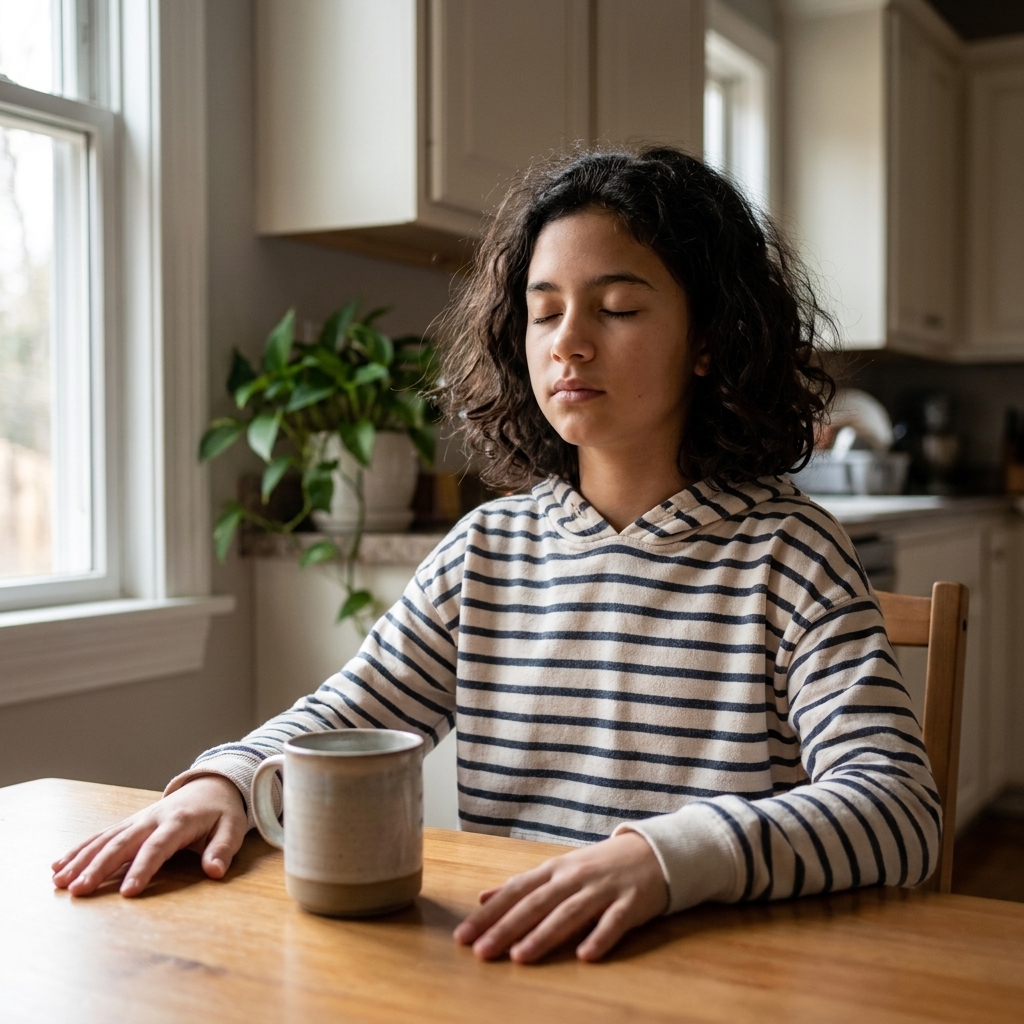
Mindfulness does not have to mean long meditations. For test anxiety, we want something quick, discreet, and repeatable.
Two test-friendly options
- Box breathing (about 30 to 90 seconds): Inhale 4, hold 4, exhale 4, hold 4. Repeat 2 to 4 rounds, or as long as needed to feel steady.
- 5-4-3-2-1 grounding (quiet version): Notice 5 things you see, 4 you feel (feet on the floor, back on the chair), 3 you hear (or 3 body sensations if the room is silent), 2 you can smell or 2 slow breaths, 1 you can taste or 1 place you feel calm in your body.
Practice this before your child is anxious, like before homework or right after school. The goal is to make it automatic, so it shows up on test day without effort.
4) Prevent cramming
Cramming increases stress and for most students and most material, it reduces retention. A calmer plan is a short, consistent routine that includes review, practice, and rest.
A weekly rhythm (adjust by grade)
- Mon: 15 minutes review of a skill area (fractions, main idea, grammar)
- Tue: 10 to 15 minutes of test-format practice questions
- Wed: Light review plus one confidence topic (the area they do well in)
- Thu: Another short practice set, then stop
- Fri: No test prep, focus on sleep and a regular evening
If your child is already overwhelmed, start smaller. Even 10 minutes counts, especially when it is consistent.
Use retrieval practice
Instead of rereading notes, ask your child to pull information from memory. Examples: “Tell me three steps to solve this type of problem” or “Explain the difference between theme and main idea.” Retrieval practice strengthens recall under pressure, which is exactly what tests demand.
What not to do: Avoid piling on brand-new content the week of the test. Also avoid repeated full-length practice tests for anxious kids unless the school specifically recommends it. Short and steady usually works better.
5) Teach a few key moves
Test anxiety often spikes when students get stuck and do not know what to do next. A small toolkit of strategies gives them an escape route, which lowers the feeling of being trapped.
Skills to practice
- Skip and return: If it is taking too long, mark it and move on. Momentum matters.
- Eliminate choices: Cross out any clearly wrong answers first, then decide between what is left.
- Find evidence in the text: For reading, have them point to the sentence that proves their answer.
- Estimate to check: For math, ask, “Does this answer make sense?” especially with word problems.
- Answer what is asked: Teach them to circle the task words: compare, justify, summarize.
These are not “tricks.” They are executive function supports that help students perform closer to their true ability.
For older students: Practice pacing. For example, set a target like “about 1 minute per multiple choice question” (adjust as needed) and use on-screen tools like flagging and review to keep moving.
6) Make test day predictable
When students feel out of control, their brains scan for certainty. A predictable routine offers exactly that.
Night-before checklist
- Lay out clothes and pack backpack or testing materials
- Eat a familiar dinner, nothing experimental
- Do a short confidence review only, then stop
- Keep a consistent bedtime and turn screens off 30 to 60 minutes before sleep
Morning-of checklist
- Protein plus a carb (examples: eggs and toast, yogurt and granola, peanut butter sandwich)
- Arrive with time to settle, not rush
- Use the calm-down routine once before starting
For younger students, I also love a simple “I know what to do” script: “Read carefully, try your best, skip and return, breathe if you get stuck.”

7) Reframe the score
This is the strategy that often matters most, especially for sensitive or high-achieving students. When a child believes a test score equals their worth, anxiety skyrockets.
Helpful reframes
- “This is one data point.” It can inform instruction, not define intelligence.
- “We focus on growth.” What improved since last time?
- “Effort is controllable.” Sleep, pacing, and persistence are wins.
If you want your child to feel safe enough to think clearly, make sure they know that your love and respect are not tied to a score.
After the test, plan something small and positive. A walk, a favorite snack, extra read-aloud time, or a low-key family activity. The message is: “You did a hard thing. Now we recover.”
If anxiety spikes mid-test
Even with preparation, some students hit a moment of panic. Teach them a simple three-step reset.
- Pause: Put the pencil down (or hands in lap) for 10 seconds.
- Breathe: One round of box breathing.
- Proceed: Choose the next small action: reread the question, eliminate one answer, flag it, or skip and return.
Practicing this exact sequence during homework makes it much more likely they will use it under pressure.
When to get extra support
Test anxiety is common, but sometimes it crosses into a level that deserves additional help.
Consider talking to your school team or a clinician if your child:
- Regularly has stomachaches, headaches, or panic symptoms around testing
- Cannot sleep for several nights leading up to assessments
- Shuts down completely during quizzes and tests despite knowing the material
- Shows intense perfectionism or fear of making any mistake
Your school counselor, teacher, or pediatrician can help you explore supports. In some cases, students may qualify for testing accommodations through a 504 plan or IEP, depending on documented needs, evaluation results, eligibility criteria, and local policies.
FAQ
How far in advance should we start?
For many students, 4 to 8 weeks of light, consistent practice is a good runway. If content mastery is mostly in place and you are primarily addressing anxiety and format familiarity, the shorter end is often enough. If your child has larger skill gaps or significant anxiety, start earlier and keep sessions short to avoid burnout.
Does timed practice help or hurt?
It depends on the student. Start untimed to build accuracy and confidence, then add gentle timing once they have a routine. Timing should be a skill-building tool, not a pressure cooker.
What if my child says they do not care, but they seem anxious?
That “I do not care” can be self-protection. Keep it low-stakes: “Let’s just practice the format for 10 minutes so it feels familiar.” Often, anxiety softens when the task feels manageable.