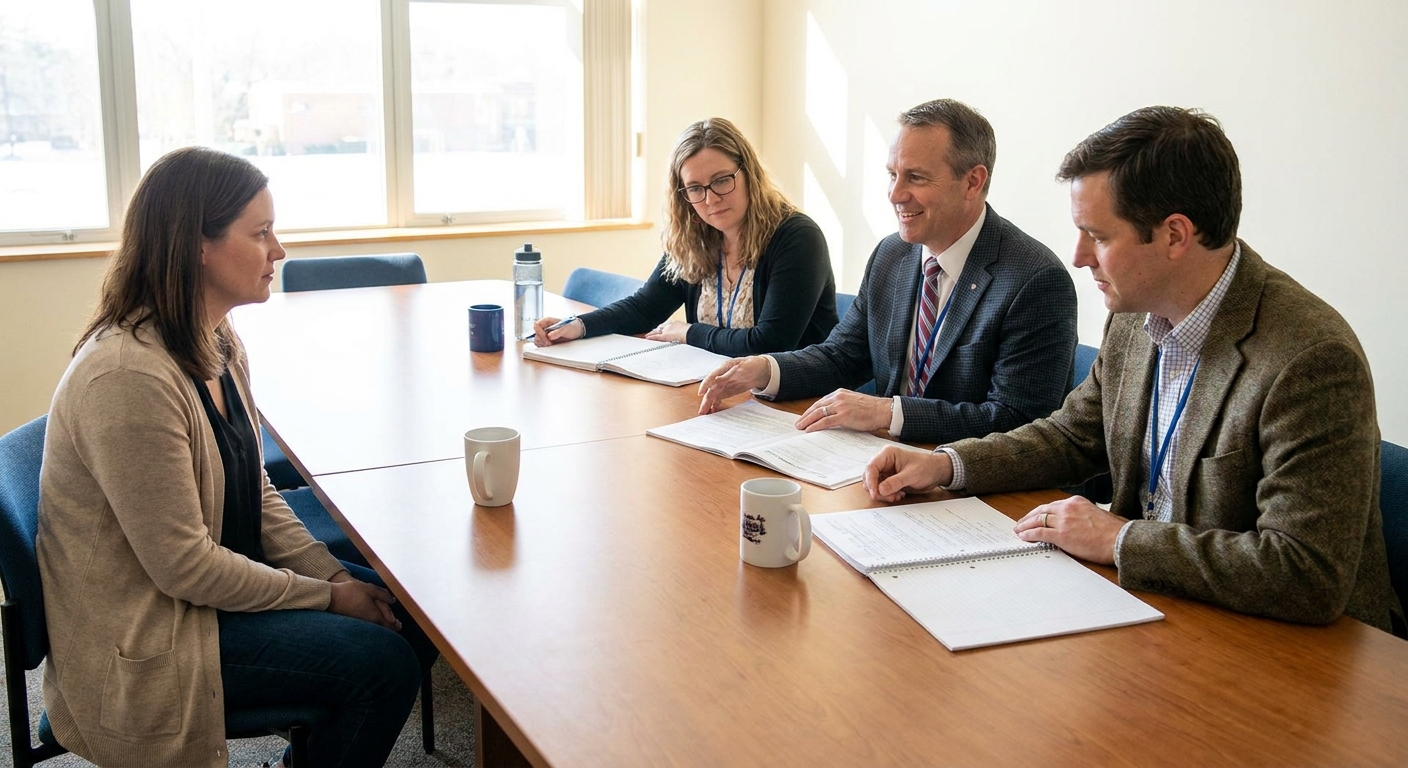
IEP meetings can feel like a lot: a room full of professionals, a stack of paperwork, and your child’s needs at the center of every decision. If you are feeling nervous, you are not alone. The good news is that you do not have to be an expert in special education law to be an effective advocate. A little preparation goes a long way.
This guide will help you walk in with a practical plan: what to expect, what to bring, what questions to ask, and what to do after the meeting so the IEP turns into real support in the classroom. While IEP rules and timelines can vary by state, district, and country, the core ideas here will help you stay organized and focused.

Quick snapshot: what an IEP meeting is
An IEP meeting is where the school team and you, as the parent or guardian, review your child’s strengths and needs and create or update an Individualized Education Program (IEP). In the United States, this process is often guided by IDEA, but procedures can still look different district to district. The IEP is a written plan that describes:
- Your child’s present levels (how they are doing right now academically, functionally, and behaviorally)
- Goals (skills your child will work toward over the year)
- Services and supports (specialized instruction, therapies, accommodations, and modifications)
- Placement and time (where services happen and how often)
- Progress monitoring (how the school will measure progress and how you will be informed)
Schools typically review IEPs at least annually. Meetings can also happen more often, including when a parent or school requests one, after an evaluation, when needs change, or when there is a concern about progress or behavior.
What to expect in the room
Teams vary by school and district, but you will typically see a mix of general education and special education staff. Common attendees include:
- You (and anyone you invite)
- A special education teacher or case manager
- A general education teacher (often at least one)
- A school administrator who can approve services and staffing
- Related service providers such as speech-language pathologist, occupational therapist, physical therapist, counselor, or behavior specialist
- A school psychologist (especially if evaluation results are being discussed)
- Your child in some cases, especially as students get older and transition planning begins
If someone essential cannot attend, in many districts the school may ask for your written agreement to excuse that person or may offer input in writing. Requirements differ, and you can say no. If you feel their live input matters for today’s decisions, it is okay to request rescheduling.

Before the meeting: a simple prep timeline
7 to 10 days before
- Confirm the purpose of the meeting (annual review, initial eligibility, reevaluation, behavior plan, transition planning).
- Request draft documents if the school prepares them (draft goals, draft present levels, proposed services). You do not have to agree to drafts, but reviewing ahead reduces stress.
- Ask for reports that will be discussed, including evaluation summaries, progress reports, or data charts. Timelines for receiving reports can vary, so ask as early as you can.
3 to 5 days before
- Write your top priorities (choose 2 to 4). Example: reading decoding, self-regulation, written expression, attendance anxiety, social skills.
- Gather your paperwork (see the checklist below).
- Draft your parent input in a few bullets. You can read it aloud or email it to the case manager to include in the IEP notes.
The night before
- Review your questions and highlight any confusing sections in the draft.
- Decide how you will take notes (notebook, printed agenda, notes app).
- Bring a support person if that helps you stay grounded, organized, or confident.
If you get less notice: Focus on two things: your top 2 priorities and your best questions. You can also ask to reschedule if you truly cannot participate meaningfully.
Documents to bring (and why each one helps)
You do not need a suitcase of paperwork, but a few key documents can make the meeting feel clearer and grounded in real information.
- Current IEP and any amendments: so you can compare what is changing and what is staying the same.
- Progress reports and report cards: to connect IEP goals to real classroom outcomes.
- Evaluation reports (school and private): psychoeducational testing, speech-language evaluations, OT reports, medical or developmental reports when relevant.
- Work samples: a few examples showing the gap between what is expected and what your child can do independently.
- Behavior data or notes: incident reports, emails, your own log of patterns (time of day, triggers, what helps).
- Communication records: key emails that clarify what was tried, what was offered, or what concerns were raised.
- A one-page “student snapshot”: strengths, interests, what motivates them, what overwhelms them, what calms them, and what has worked in the past.
Practical tip: Put everything in a folder in this order: IEP, progress, evaluations, work samples, communication. Add sticky notes for the pages you want to reference quickly.

Questions to ask at the IEP meeting
If you are not sure what to say, start with questions. Questions keep the meeting focused on clarity, data, and follow-through.
1) Questions about current performance
- Can you show me the data you are using to describe my child’s present levels?
- What does my child do well independently, and where do they need adult support?
- How is my child performing compared to grade-level expectations?
- What does a typical day look like for them right now, including challenging moments?
2) Questions about goals
- Which skills matter most for access to the curriculum this year?
- Are these goals specific and measurable? What does “mastery” look like?
- How often will progress be measured, and what tools will you use?
- What is the baseline, and what is a realistic target by the annual review?
3) Questions about services and minutes
- What service is being provided, by whom, and how often?
- Is the service direct (with my child) or consultative (adult-to-adult support)?
- Will services happen in the classroom, in a separate setting, or a mix?
- What is the plan if a session is missed? Will it be rescheduled when possible, and how will missed time be tracked?
4) Questions about accommodations and modifications
- Which accommodations will be used routinely, not just “available”?
- Who is responsible for making sure each accommodation happens?
- How will we know the accommodations are working?
- Are there assignments or expectations that need modification, not just accommodation?
5) Questions about behavior supports
- What patterns are you seeing, and what triggers have been identified?
- What proactive supports will be in place before behavior escalates?
- How will staff respond in the moment, and how will it be documented?
- Do we need a Functional Behavior Assessment (FBA) or a Behavior Intervention Plan (BIP)?
6) Questions about placement and inclusion
- What supports will make it possible for my child to learn alongside peers as much as appropriate?
- What parts of the day are most challenging, and what placement options are being considered?
- How will transitions (between classes or settings) be supported?
7) Questions for older students: transition planning
- What skills should we prioritize for independence, employment, or postsecondary education?
- What transition assessments have been used?
- What courses, community experiences, or services support these goals?
My favorite “reset” question when meetings get confusing: “Can we pause and define what success looks like for my child in the next 8 to 12 weeks?”
First-time families: a calm plan
If this is your first IEP meeting, your main job is not to memorize terminology. Your main job is to make sure the plan reflects your child as a whole person and that the supports are concrete enough to actually happen.
Focus on these three things
- Understanding: Ask for plain language. It is okay to say, “Can you explain that without acronyms?”
- Details: Push for specifics. “Extra help” is vague. “Small group reading instruction, 30 minutes, 4 times per week” is actionable.
- Fit: Make sure services match needs. If reading is the biggest barrier, the plan should clearly address reading.
Permission to go slow: You generally do not have to make big decisions on the spot. Ask what, if anything, requires your written consent, what the timeline is, and how you can follow up with questions after you have reviewed the proposed plan.
Experienced families: level up
Once you have been to a few IEP meetings, the challenge often shifts from “What is this?” to “How do we make it effective?” Here are higher-leverage moves that help keep the plan strong year over year.
Bring it back to data
- Ask for baseline numbers for each goal, not just general statements.
- Request progress monitoring that matches the skill (for example, regular reading fluency probes for decoding and fluency goals).
Check IEP alignment
- Do present levels clearly explain why each goal exists?
- Do services and accommodations clearly support those goals?
- Does the schedule realistically allow the services to happen?
Clarify implementation
- Ask how general education teachers will be informed of accommodations.
- Ask what training or coaching staff receive for your child’s specific needs.
- Request a point person for weekly or biweekly communication if consistency has been a challenge.

When you disagree
Disagreement does not have to mean conflict. You can be firm and collaborative at the same time. A few phrases I have seen work well:
- “I appreciate the draft. I want to make sure it is implementable. Can we add details about frequency and setting?”
- “I hear that you are seeing progress. Can we look at the data together and compare it to grade-level expectations?”
- “I am not comfortable agreeing to that change today. I would like time to review and come back with questions.”
- “What options are we not discussing yet that could address this need?”
Important: If you want your disagreement recorded, ask that it be included in the meeting notes. If the school is proposing or refusing a change (services, placement, evaluation, supports), you can also request Prior Written Notice that documents what was proposed or refused and why.
Placement and LRE
Placement is not just a classroom label. It is the combination of services, supports, and setting where your child will receive them. In the United States, you may hear “LRE,” or least restrictive environment. In plain language, it means the team should start with the idea of learning with peers as much as appropriate, and then add supports and services to make that work when possible.
If the team is considering a more separate setting, ask: “What supports have we tried, what data shows they were not enough, and what will be different in the proposed placement?”
Rights basics
Procedures vary, but these are common parent rights and options in many U.S. IEP systems:
- Request a meeting: You can ask the team to meet if concerns come up. You do not have to wait for the annual review.
- Bring support: You can typically bring a spouse, friend, advocate, or private provider.
- Access records: You can request copies of evaluations, progress data, and relevant records (timelines vary).
- Disagree with an evaluation: You may be able to request an Independent Educational Evaluation (IEE) at public expense if you disagree with the school’s evaluation. The process and requirements vary, so ask your district to explain their steps in writing.
- Resolve disputes: If you get stuck, options may include facilitated meetings, mediation, state complaints, or due process. Many families use these only as a last resort.
Note: None of this is legal advice. If your situation is complex, consider connecting with a local parent center or special education advocate familiar with your state’s rules.
Language access
If you prefer a language other than English, you can ask for an interpreter and translated documents. It helps to request this as soon as the meeting is scheduled so the school has time to arrange it.
Virtual meeting tips
- Ask for documents ahead: Request drafts and reports by email so you can follow along.
- Plan your notes: Use a printed agenda or a notes app so you can capture decisions in real time.
- Pause on confusion: It is okay to say, “Can we stop and restate that in plain language?”
- Recording: Rules vary by state and district. If you want to record, ask in advance and follow your local requirements.
Day-of checklist
- Bring: folder, notebook, pen, your question list, and any key reports.
- Arrive with 2 to 4 priorities so you do not get lost in side conversations.
- Ask for introductions and roles if you do not know everyone.
- Request breaks if needed. A two-minute pause can prevent an overwhelmed yes.
- End with a recap: who is doing what, when it starts, and when you will receive the finalized IEP.
After the meeting: follow-up
The meeting is only the first step. The real goal is consistent implementation.
Within 24 to 48 hours
- Email a thank-you and summary of what you understood was decided. Keep it short and factual.
- Request the finalized copy of the IEP if you did not receive it.
Within 2 to 3 weeks
- Check that services have started (minutes, provider, schedule).
- Ask how accommodations are being communicated to each teacher who works with your child.
- Set a communication routine if helpful: a weekly email, a shared log, or a quick monthly check-in.
Ongoing
- Track progress using the school’s updates plus your own notes.
- Save work samples every month or quarter to spot growth or stagnation.
- Request a meeting if the plan is not being implemented, progress stalls, or new concerns appear.
Common surprises
“We do not have that service available.”
You can respond with: “What service will meet the need we have identified, and how will it be delivered?” Bring the conversation back to needs and support, not staffing.
“Let’s wait and see.”
Sometimes monitoring makes sense, but ask for a timeline and a plan: “What will we try during the next 6 to 8 weeks, how will we measure it, and when will we reconvene to review the data?”
“They are doing fine.”
Ask: “Fine compared to what?” Request concrete data and clarify whether “fine” means grade-level performance, adequate progress toward goals, or simply no major behavior incidents.
Meeting feels rushed
You can say: “I want to be respectful of time, and I also want to be sure we make decisions we can stand behind. Can we schedule a follow-up meeting to finish reviewing goals and services?”
Mini script: parent input
If you want a starting point, here is a simple structure you can personalize:
- Strengths: “My child is curious, kind, and learns best with hands-on activities.”
- Concerns: “Reading and written output are causing frustration and avoidance.”
- What works: “Short directions, previewing new vocabulary, movement breaks, and choices reduce shutdowns.”
- Priorities: “This year, I want us to focus on reading skill growth, confidence, and consistent classroom supports.”
FAQ
Can I bring someone with me to an IEP meeting?
Yes. Many families bring a spouse or partner, a trusted friend, an advocate, or a private provider. If bringing someone changes scheduling needs (for example, an outside therapist), it helps to notify the school in advance.
Do I have to sign the IEP at the meeting?
Procedures vary widely. Some districts ask for signatures at the meeting, while others do not require a signature for the plan to move forward (except for certain consents, like initial eligibility or initial services). You can ask what, specifically, requires consent, what the deadline is, and whether you can review the document at home before deciding.
What if the IEP looks good on paper but is not happening?
Start by documenting what you are seeing and asking for a problem-solving meeting. Implementation issues are common, and they are fixable when everyone gets specific about schedules, responsibilities, and communication.
A final note
I have sat on both sides of the table as an educator and an advisor, and I want you to hear this clearly: you belong in that room. You know your child best, and your perspective is essential. Bring your questions, ask for clarity, and do not be afraid to slow the process down until the plan feels both supportive and realistic.
If you want an easy next step, choose one thing to do today: start a folder, request draft documents, or write a one-page student snapshot. Small actions create big momentum.