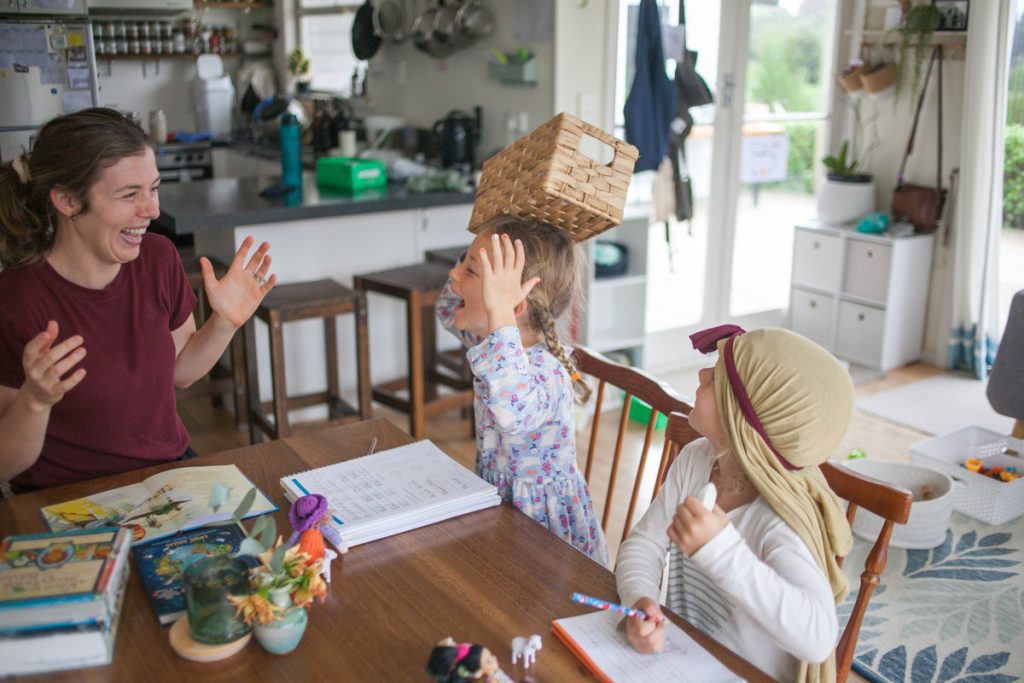
When families tell me, “I want to help my child read, but I do not know where to start,” I always begin with the same reassurance: you do not need to be a teacher to support phonics practice well at home. You need a clear sequence, a few evidence-based routines, and the patience to practice in small, steady steps.
This guide walks you through what phonics is, how it fits into learning to read, and exactly what to do at home. Whether your child is in kindergarten, first grade, or learning at home full time, you can use these strategies to build confident, independent readers.
Phonics, explained
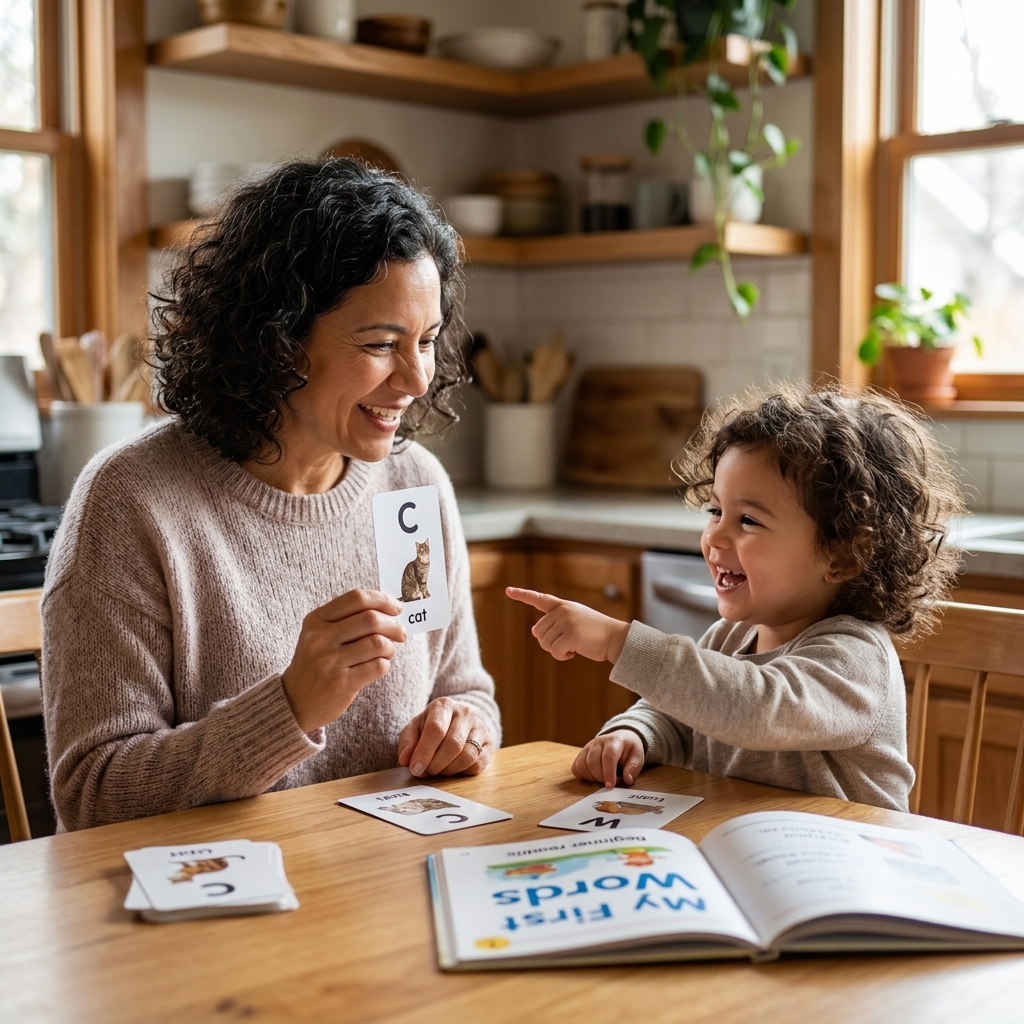
Phonics is the relationship between letters and sounds, and how children use those relationships to read and spell. When kids learn that m usually says /m/ and that sh says /sh/, they can decode new words instead of memorizing them one by one.
Phonics vs. phonemic awareness
These two are partners, but they are not the same:
- Phonemic awareness is hearing and manipulating sounds in spoken words, like noticing that “cat” has three sounds: /k/ /a/ /t/. No print required.
- Phonics connects those sounds to letters and letter patterns on the page.
If a child struggles to sound out words, it is often because one of these areas needs more practice.
What good phonics looks like
There is a reason many schools and reading specialists emphasize “systematic” phonics. It means skills are taught in a planned order, practiced often, and reviewed regularly. At home, you can absolutely do this in a calm, kid-friendly way.
Big principles to follow
- Explicit: You directly teach the sound-spelling pattern instead of hoping they pick it up.
- Systematic: You move from simple to more complex patterns.
- Cumulative: You constantly review older skills while adding new ones.
- Multisensory: Kids see it, say it, hear it, and write it.
- Lots of decoding practice: Children read many short, easy words and sentences that match what they have learned.
If your child is guessing from pictures or the first letter, that is a sign to slow down and strengthen decoding. Guessing feels like reading until the text gets harder.
Quick note about pacing: Keep lessons short and positive, and build in tiny breaks if your child gets wiggly or frustrated. Two focused minutes beats ten overwhelmed minutes.
A simple home sequence
You do not need to reinvent a curriculum to benefit from a sequence. Use this as a roadmap and move at your child’s pace. Mastery matters more than speed.
Stage 1: Sound awareness and basics
- Rhyming and beginning sounds (kite, key, and kitten all start with /k/) and the idea that some letters can make more than one sound (like
csaying /k/ in cat and /s/ in city) - Letter names and common letter sounds
- Blending and segmenting (push sounds together and pull them apart)
Stage 2: CVC words
- Short vowels:
a e i o u - Decoding and spelling words like sat, tip, log, mud
- High-frequency decodable words like in, it, is, at (varies by program)
Stage 3: Digraphs and blends
- Digraphs:
sh, ch, th, wh, ck - Consonant blends and clusters (including final blends like
-mp,-nd):st, bl, cr, mp, nd - Reading longer words like ship, chop, hand, stop
Stage 4: Long vowels and teams
- Silent
e: cap to cape, kit to kite - Common vowel teams:
ai, ay, ee, ea, oa, ow - R-controlled vowels:
ar, or, er, ir, ur
Helpful nuance: Some vowel teams can make more than one sound. For example, ow can be /oʊ/ as in snow or /aʊ/ as in cow. ea is often /ee/ as in team, but not always. Teach the most common sound first, then add “other sounds it can say” later.
Stage 5: Longer words and patterns
- Open vs. closed syllables (a helpful later tool)
- Common prefixes and suffixes (un-, re-, -ing, -ed)
- Less common vowel patterns (
igh, oi, ou, au)
Your 15-minute routine
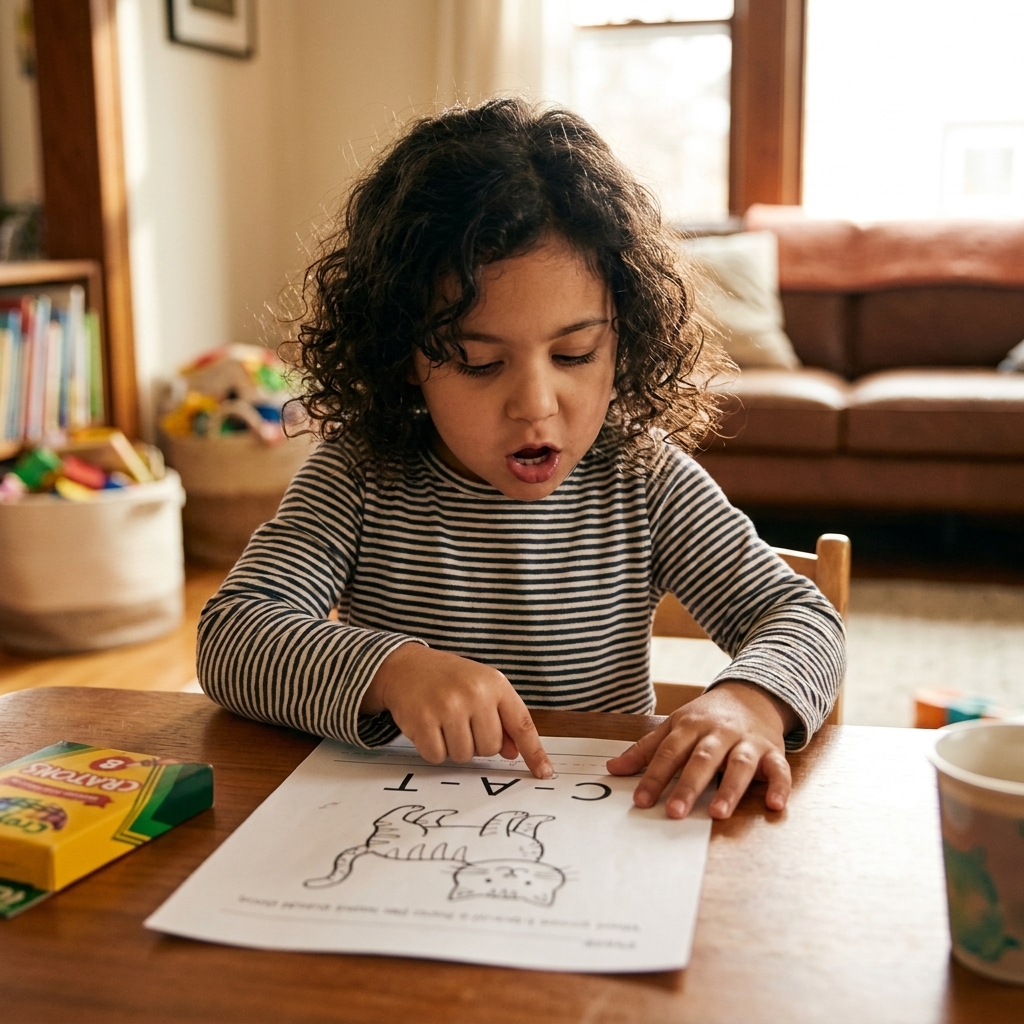
Consistency is your superpower. Short daily practice usually beats a long weekly session. Here is a structure I used in classrooms and recommend to families because it is predictable and effective.
Minute-by-minute plan
- 2 minutes: Review (3 to 6 flashcards or a quick sound drill)
- 3 minutes: Teach one new skill (one sound, one pattern, or one rule)
- 5 minutes: Blend and read (word lists, then simple sentences)
- 3 minutes: Write (dictate 3 to 5 words that match the skill)
- 2 minutes: Read a decodable text (very short is fine)
What to say
Parents often ask me for a script. Here is a model you can borrow:
- “This is
sh. It makes one sound: /sh/ like ship.” - “Watch my mouth: /sh/. Now you try.”
- “Let’s read these: sh + i + p. Slide the sounds together: /sh/ /i/ /p/ … ship.”
- “Now you write ship. Say the sounds as you write.”
Make blending easier
One small tip can make a big difference: how you pronounce sounds.
Continuous vs. stop sounds
- Continuous sounds can be stretched: /m/, /s/, /f/, /n/, /sh/. You can hold them: “mmmm,” “ssss.”
- Stop sounds are quick: /p/, /t/, /k/, /b/, /d/, /g/. They “pop” and cannot be held the same way.
Try this: When you model blending, keep sounds crisp and avoid adding an extra “uh” (saying /muh/ for m), because that makes blending harder: /m/ /a/ /t/ blends more cleanly into mat than /muh/ /a/ /tuh/.
Daily exercises that work
Phonics grows fastest when kids do a little bit of the right practice every day. Rotate these activities so it stays fresh, but keep the core skill the same for a week or two at a time.
1) Sound push and pull
Say a word like “map.” Ask your child to tap three times for the sounds: /m/ /a/ /p/. Then blend them back together.
- Easier: Use two-sound words like “me,” “no.”
- Harder: Use four-sound words like “stamp.”
2) Letter-sound quick drill
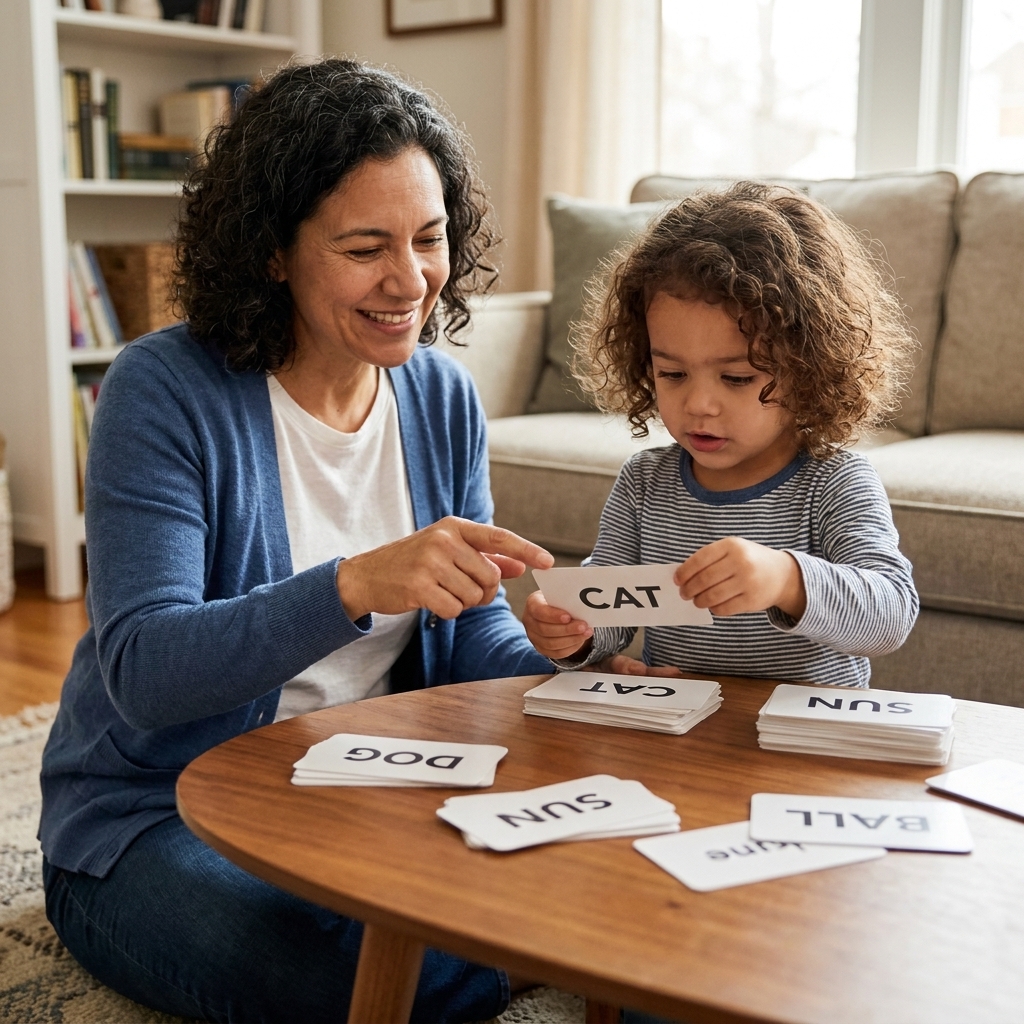
Flash 10 to 20 cards (letters or spelling patterns). Your child says the sound. Keep it upbeat and short.
Tip: If your child confuses two sounds, pull them out and practice just those for a few days.
3) Word building
Build sat. Then swap one letter: sat to sit to sip to tip. This helps kids see that words are made of parts.
4) Dictation
Say a word, your child repeats it, stretches the sounds, and writes it. This strengthens the “sound to symbol” pathway.
Example for short a: sat, map, jam, hand.
5) Decodable reading
Decodable books are designed so children can actually read them using the phonics patterns they know. If a book requires lots of guessing, it is not the right match for phonics practice.

Phonics plus meaning
Phonics is essential, but it is only one part of reading. To build strong comprehension, pair decoding practice with language and knowledge building:
- Read aloud every day (books above your child’s reading level are perfect here).
- Talk about word meanings: “What does enormous mean? What is something enormous?”
- Build background knowledge with nonfiction and rich stories, then chat about what you learned.
Common roadblocks
“My child memorizes books but cannot read new words.”
This is very common, especially if a child has been praised for “reading” patterned books early on. Shift practice to decoding:
- Use decodable texts that match the patterns you are teaching.
- Cover pictures during practice reading to reduce guessing.
- Prompt with: “Look at all the letters. What sound does this part make?”
“My child mixes up b and d.”
Letter reversals are common in early years. Focus on consistent cues, not pressure.
- Practice with multisensory writing (trace in sand, write on a whiteboard).
- Use a key word and picture in your mind: b is “bat then ball,” d is “drum then stick.”
- Keep a small alphabet strip on the table for reference.
“My child can sound out, but it is painfully slow.”
Slow decoding is a normal phase. Speed comes from accurate practice.
- Reread the same decodable passage 2 to 3 times across the week.
- Do “phrase reads”: you read a short phrase, your child echoes it.
- Keep sessions short. Fatigue makes fluency worse.
“My child guesses even when we practice phonics.”
Guessing is usually a habit plus a confidence issue. Try:
- Reduce text difficulty so your child can decode successfully.
- Use a bookmark to reveal one line at a time.
- Ask them to touch under each letter or spelling pattern as they say the sound.
When to seek extra support
If your child has had consistent instruction and practice but still struggles significantly, it can be worth talking with your school team, a reading specialist, or a structured literacy tutor. Early support is powerful.
Consider reaching out sooner if you notice several of these signs:
- Persistent difficulty with phonemic awareness tasks (blending, segmenting) even after weeks of practice
- Extreme difficulty remembering letter-sound correspondences
- Reading progress that is much slower than expected despite regular, targeted practice
- A strong family history of dyslexia or reading difficulty
Choosing materials
You can teach phonics with very simple tools. Fancy kits are not required. What matters is that the materials match the skill your child is learning.
At-home essentials
- Magnetic letters or letter tiles (even homemade paper tiles work)
- A small whiteboard and marker
- Decodable readers that follow a clear sequence
- Index cards for sound patterns and review words
Green flags in a program
- A clear scope and sequence (what is taught and when)
- Daily blending practice and connected text reading
- Built-in review and cumulative practice
- Guidance for parents on what to say and do
A gentle note about sight words
High-frequency words can be taught in a phonics-first way. Many are fully decodable once kids know the patterns, and some have irregular parts (like said). It is fine to teach a small set of truly irregular words, especially when you point out the “regular” parts and the tricky part to remember.
Quick progress checks
You do not need formal assessments at home. You do need a way to notice growth and to catch gaps early.
Once a week, try these 5-minute checks
- Sound check: Show 10 letter patterns, ask for sounds.
- Word reading: Have your child read 10 words that match current skills.
- Spelling: Dictate 5 words, then one short sentence.
- Decodable read: Listen for accuracy and whether they self-correct.
What you are listening for: Are errors consistent (always short e confusion)? That tells you exactly what to review next week.
Sample weekly plan
Adjust up or down depending on your child. If this feels like too much, shorten the time, not the quality.
Monday
- Introduce one pattern (example:
sh) - Build 6 words (sh + short vowels)
- Read 4 short sentences
Tuesday
- Review
shand short vowels - Word list: 10 to 15 words
- Dictation: 3 words + 1 sentence
Wednesday
- Reread yesterday’s sentences
- Decodable book reading
- One fun game (see below)
Thursday
- Mixed review (older patterns +
sh) - New decodable passage
- Spelling practice
Friday
- Quick check (sounds, words, and one short read)
- Celebrate progress and choose a read-aloud for fun
Phonics games
Games are wonderful when they keep kids reading and spelling, not just moving pieces around.
Try these at home
- Word hunt: Pick a pattern (like
ai) and hunt for it in books, signs, or grocery lists. - Roll and read: Assign words to dice numbers and read what you roll.
- Swap one sound: You say “make ship into shop.” They change one sound and read it.
- Sound sorter: Sort words by vowel sound (short
avs. shorti).
FAQ
How long does it take to learn phonics?
Most children build the foundations across kindergarten and first grade, but the timeline varies. Instruction quality and steady, accurate practice both matter a lot, and the pace can look different for different learners.
Should I teach letter names or letter sounds first?
It is helpful to teach both, but prioritize letter sounds for reading. Many children can learn the name and sound together: “This is m. Its name is em. It says /m/.”
What if English is not the only language in our home?
Bilingual children can absolutely learn phonics. Be mindful that some sounds do not exist in every language, and letter-sound relationships may differ. Extra mouth modeling, slow blending, and plenty of listening practice can help.
Is phonics enough to make my child a strong reader?
Phonics is necessary, but not sufficient. Strong readers also need vocabulary, background knowledge, and comprehension. Keep reading aloud daily and talking about what you read. That language exposure fuels understanding.
A final note
If you take nothing else from this guide, take this: phonics works best when your child experiences daily success. Keep lessons short, celebrate effort, and revisit skills without shame. Reading is not a race. It is a staircase, and every small step matters.
If you would like a little direction, share in the comments what your child can do right now (for example, “knows most letter sounds,” or “can read CVC words but struggles with long vowels”). I will suggest a practical starting point you can try this week.