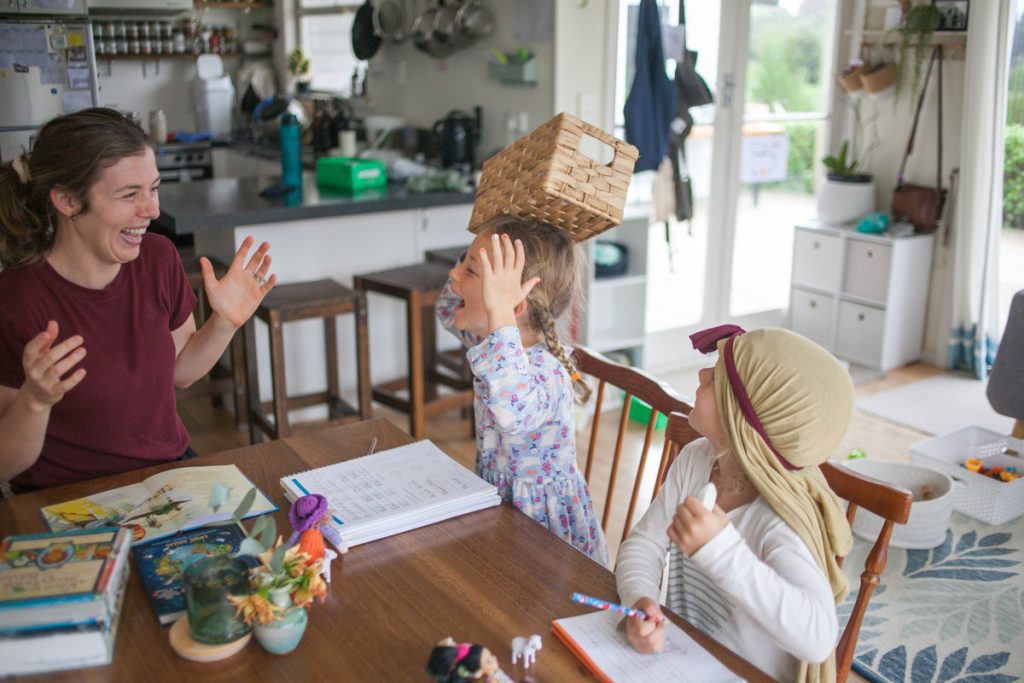
Switching from public school to homeschooling can feel like stepping off a moving sidewalk. Things are still in motion, and you are trying to find your footing quickly. The good news is that you do not need to have everything perfect on day one. You need a clear plan, a legal checklist for your state, and a gentle on-ramp for your child.
This guide walks you through the transition step by step, from paperwork to curriculum to the emotional shift that often surprises families the most.

Step 1: Clarify your why and timeline
Before you withdraw, take 20 minutes to write down what is pushing you toward homeschooling and what you hope will change. This is not busywork. It becomes your anchor when relatives question you, when a tough week hits, or when you are choosing between five curriculum options that all sound amazing.
Questions to answer
- Is this a short-term reset or a long-term plan? Some families homeschool for a semester to address anxiety or bullying, then reassess.
- What matters most right now? Academic catch-up, flexible pacing, mental health, faith-based instruction, more family time, fewer behavior issues, deeper challenge, or something else.
- What is your start date? Mid-year transitions are common. If you are leaving during the school year, be extra careful about attendance rules in your state.
If your child is asking for the change, include them in this conversation. If the change is being made for safety or well-being reasons, you can still offer choice in the parts they can control, like where learning happens or what topics they want to explore first.
Step 2: Learn your state homeschool rules
Homeschooling is permitted in all 50 states, but the definitions, pathways, and requirements vary a lot. In one state you may be filing under a homeschool statute. In another, you may be operating as a private school, under an umbrella school, or through a district option.
Some states require a notice of intent. Others require annual evaluations, portfolio reviews, or standardized testing. A few have very minimal oversight.
Here is the safest approach I have used with families for years: treat compliance as your first subject. Once the legal piece is handled, you can focus on learning with a clearer mind.
What to look up for your state
- How to legally establish homeschooling (notice of intent, umbrella school, private school affidavit, or district notification depending on your state)
- Compulsory attendance ages and whether kindergarten is mandatory
- Required subjects (many states specify reading, math, science, social studies, and sometimes health or civics)
- Recordkeeping requirements (attendance logs, portfolios, immunization records, course descriptions)
- Assessment rules (standardized tests, evaluations by a certified teacher, or none)
- Parent qualification requirements (rare, but a few states have conditions)
Where to find reliable information
- Your state department of education website
- Your local school district homeschool page, if available
- A well-established homeschool legal advocacy organization that summarizes laws by state
Important: If your child receives special education services (IEP or 504 plan), your state may have additional rules or options for accessing services while homeschooling. It is worth reading that section carefully before you withdraw.
Step 3: Withdraw properly (and document everything)
How you leave matters, especially mid-year. A clean withdrawal reduces the risk of attendance confusion and makes it easier to request records later.
One timing note: In some states, you need to file your notice of intent or affidavit before you withdraw to avoid truancy issues. In others, you withdraw first and file immediately after. Check your state’s sequence so you do this in the safest order.
Public school withdrawal checklist
- Send a written withdrawal letter to the school office and copy the principal or attendance clerk.
- State the effective date your child will stop attending.
- Keep a copy of your letter and any reply.
- Request records you will want for your homeschool files: report cards, transcripts if applicable, standardized test scores, and any IEP or 504 documentation.
- Return school property (devices, textbooks) and get a receipt if possible.
Even if the school staff is supportive, do not rely on verbal conversations. In education, paperwork is protection. You are not being dramatic. You are being thorough.

Step 4: Choose an approach first
Curriculum is important, but it makes more sense once you know your approach. Think of approach as the container your curriculum will sit inside.
Common approaches
- Traditional or school-at-home: Works well for families who want structure and clear grade-level coverage.
- Classical: Often literature-rich and discussion-heavy. Great for strong readers and families who enjoy routine.
- Charlotte Mason: Gentle, book-based, nature and arts friendly, often excellent for reluctant worksheet kids.
- Unit studies: One theme across multiple subjects. Engaging, especially for elementary and middle school.
- Unschooling or child-led: Deeply personalized, but it requires parents to be very intentional about resources and documentation.
- Online or virtual programs: Helpful if you need built-in instruction, but consider screen time and flexibility.
If you are transitioning because school was overwhelming, start with an approach that reduces friction. Structure can be calming, but too much can feel like you just recreated the problem at home.
Step 5: Assess the real starting point
Public school grade levels do not always match a child’s current skill levels, especially after a stressful year, frequent absences, or a mismatch between teaching style and learning needs. Before you buy a full year of materials, take a week or two to observe and gather information.
Low-pressure ways to assess
- Review last report cards and teacher comments for patterns.
- Do informal skill checks: read a short passage aloud, solve a few math problems, write a paragraph, talk through a science concept.
- Use placement tests offered by many curriculum publishers, especially for math and language arts.
- Watch for burnout signals: tears, avoidance, perfectionism, stomachaches, anger, or shutting down.
As a former classroom teacher, I will tell you what I told many families: a child who feels safe learns faster. If your child is dysregulated, the first lesson plan is stability.
A note on decompression
Some kids need a short “decompression” period after leaving school, especially if anxiety, conflict, or exhaustion has been building for months. This can look like lighter academics, lots of reading aloud, hands-on projects, time outside, and rebuilding basic routines like sleep and meals. Think of it as recovery, not falling behind.
Step 6: Choose a minimum viable curriculum
When families start homeschooling, it is easy to overbuy. You are trying to be responsible, and the internet makes it look like everyone has a color-coded plan and a booklist the length of a novel.
Instead, start with a minimum viable plan: the smallest set of resources that covers core needs and gives you room to adjust.
A strong starter set (most grades)
- Math program with clear practice and review
- Language arts that covers reading, writing, spelling, and grammar in a developmentally appropriate way
- Science (can be experiment-based, nature-based, or text-based)
- Social studies (history, geography, civics depending on grade)
- Reading plan that includes daily independent reading and read-aloud time
A simple weekly example
- Daily: math + language arts + reading
- Rotate: science and social studies on alternating days
- Weekly: one longer project, lab, or field trip style learning block
What to consider
- Teaching load: Is it parent-led, independent, or a mix?
- Flexibility: Can you speed up or slow down easily?
- Learning style: Does your child need movement, visuals, discussion, or hands-on work?
- Neurodiversity support: Built-in scaffolds, short lessons, multisensory practice
- Budget: Remember libraries, used curriculum swaps, and open educational resources can lower costs.
If you are unsure, choose a curriculum that is easy to resell or reuse. It takes pressure off the decision.
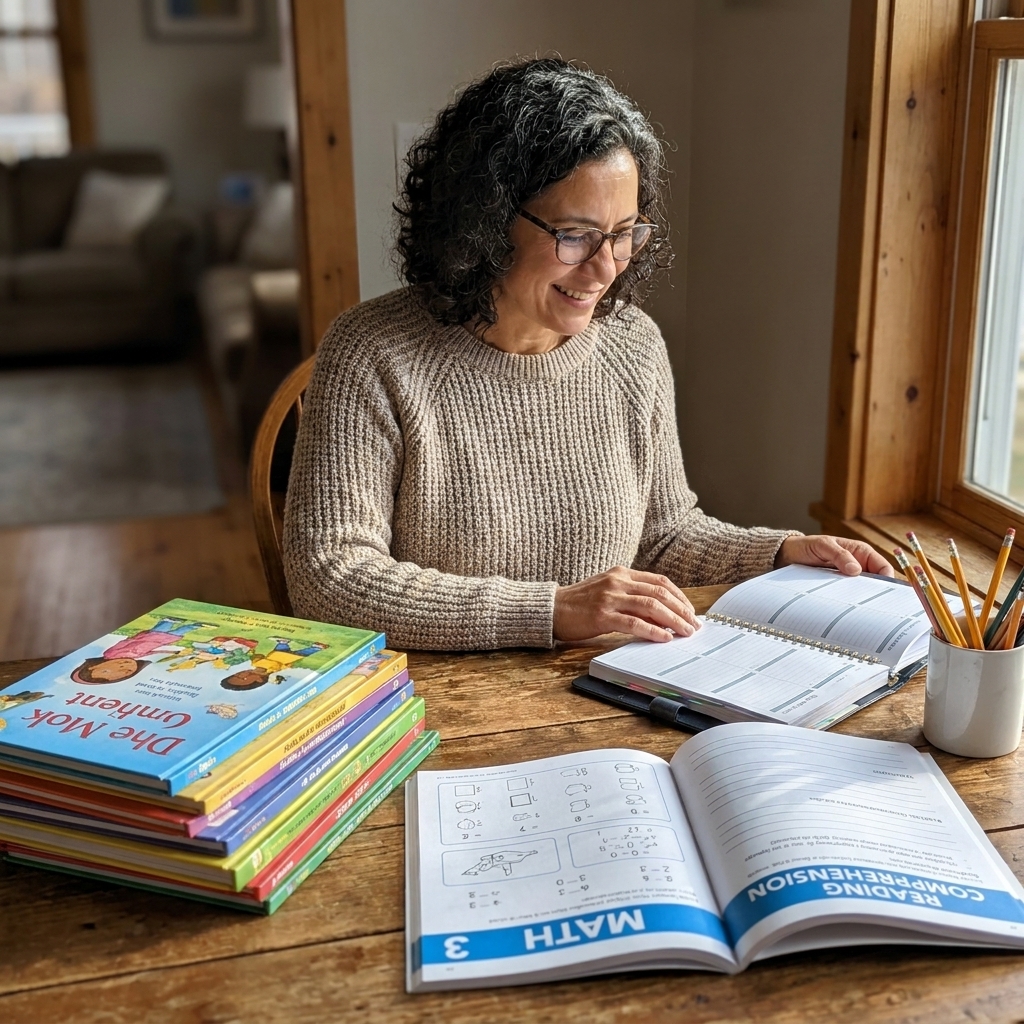
Step 7: Build a simple schedule
Homeschool schedules should serve your family, not trap your family. The biggest mindset shift for kids coming from public school is that learning can happen without bells, permission slips, or a strict 8-to-3 structure.
Here are two options that work well for many families. You can try one for two weeks, then adjust.
Option A: Time blocks
- Morning block: math and language arts
- Midday: lunch and movement
- Afternoon block: science, social studies, projects, reading
Option B: Checklist
- Math lesson
- Reading (independent or with you)
- Writing task
- One content lesson (science or social studies)
- One life skill or enrichment (cooking, art, music, PE)
Aim for consistency, not intensity. Some families find that elementary students can do strong academic work in 2 to 4 focused hours a day at home, especially when stress is lower and transitions are smoother. Middle and high school often require more time, but it still tends to be more efficient than a full school day.
Step 8: Plan the emotional transition
Even when homeschooling is the right move, it is still a change. Your child may grieve friends, routines, trusted adults, or even the identity of being a public school kid. They may also feel relieved and then suddenly anxious because the newness is unfamiliar.
How to support your child
- Name the mixed feelings: “You can be excited and sad at the same time.”
- Keep connections where possible: playdates, extracurriculars, weekend meetups, sports, clubs.
- Give them a role: let them help design the learning space, choose read-alouds, or pick a first unit topic.
- Start with wins: include subjects they enjoy in the first week so home learning feels doable.
- Watch for anxiety spikes: transitions often show up as irritability, sleep changes, or avoidance.
If you are leaving due to bullying, school refusal, or mental health concerns, consider adding outside support. A therapist, counselor, or educational specialist can help your child rebuild confidence and coping skills while you stabilize learning at home.

Step 9: Schedule social time
One of the most common fears parents share is socialization. In my experience, the question is not “Will my child socialize?” It is “Will my child have consistent, healthy community?” You can design that.
Where community happens
- Local homeschool co-ops or learning pods
- Library programs and book clubs
- Community sports, martial arts, dance, theater
- Scouts or service groups
- Faith communities
- Museum and nature center classes
For kids transitioning from public school, social life can be the biggest loss. It helps to schedule at least one recurring social activity per week within the first month, even if academics are still settling.
Step 10: Start recordkeeping now
Recordkeeping sounds intimidating, but it can be simple. Your goal is to show that learning happened and that you complied with state rules.
Easy systems
- Attendance log: a simple calendar or spreadsheet
- Portfolio: monthly samples of writing, math, projects, photos of hands-on work
- Reading list: titles and dates
- Course descriptions: especially for middle and high school
- Grades and credits: if your teen may return to public school or apply to college
For high school students, also keep syllabi, major assignments, and assessment notes. If college may be in the picture, strong documentation makes transcripts and course descriptions much easier later.
If your student might re-enter public school, take a quick look at your district or state graduation and credit policies. Requirements and credit acceptance can vary, and it is easier to align as you go than to backtrack later.
Special education (IEP or 504)
This is one of the most important transition points to understand clearly. In many states, once you withdraw from public school to homeschool, the district may not be required to provide the same services you had under an IEP. In some places, homeschoolers may be treated differently than students who are “parentally placed” in private schools under IDEA, which can affect access to equitable services.
Before you withdraw
- Request copies of the most recent IEP or 504 plan and evaluations.
- Ask, in writing, what services are available to homeschool students in your district or state.
- Ask specifically whether your child could qualify for equitable services as a parentally placed private school student in your state, and what that process looks like locally.
- If your child needs therapies (speech, OT), explore private providers or community clinics early since waitlists can be long.
If you are unsure what to ask, use your state rules and your child’s current grade level to draft a short question list for your district. Keep it simple and specific so you get clear answers in writing.
Common transition bumps
My child treats homeschool like a vacation
That is normal at first. Set a gentle routine, keep lessons short, and build in movement breaks. Many families do a short decompression period after leaving school, especially if the previous environment was stressful.
I am worried I am not qualified
You do not need to replicate a full school staff. You need to facilitate learning. Strong homeschool curriculum acts like your co-teacher, and the library plus community classes can fill in a lot. If you can read directions, ask questions, and stay consistent, you can do this.
We are fighting more than before
Start by lowering the workload and increasing connection. Relationship comes before rigor in the early weeks. Also consider whether the curriculum is too hard, too easy, or too parent-intensive.
I am scared about college later
Homeschoolers are admitted to colleges every year, including highly selective schools. The key is documentation, solid academics, and a plan for high school credits, testing (if needed), and extracurriculars. You do not have to solve all of that in elementary, but it is wise to keep records as you go.
FAQ
Can I homeschool mid-year?
Yes, in most places you can start homeschooling at any time. The key is to follow your state’s legal steps and withdraw properly so your child is not marked truant. Pay attention to your state’s filing sequence, since some states expect your notice first.
Do I have to follow the public school curriculum?
Usually, no. Most states require certain subjects, not a specific curriculum. However, if you expect to re-enroll soon, you may want to keep core subjects reasonably aligned.
How many hours a day should we homeschool?
It depends on age, attention span, and learning needs. Many elementary students do well with a few focused academic hours plus reading and enrichment. Older students often need more time, especially for writing-heavy and advanced courses.
What if my child wants to go back to public school later?
Keep good records and samples of work. Re-enrollment policies vary by district, and placement decisions may involve testing, transcripts, or portfolio review.
A final note
If you are making this switch, you are not giving up on school. You are taking responsibility for your child’s learning in a new way. Start simple, stay legal, protect connection, and give yourselves time to adjust. A calm, consistent home learning environment can be incredibly healing and surprisingly effective.
When you are ready, your next step is to choose a first-week plan. One week. Not one year. One week you can do.